
Table of Contents
- Quiet Power: Jewellery as a Status Symbol (Signet Rings, Diamonds, Chains & Meaning)
- Why Jewellery Reads As “Power” In The First Place
- The Ring: The Most Direct Symbol Of Authority
- Chains And Necklaces: Strength, Visibility, And Cultural Code
- Materials That Command Respect (And Why)
- The Difference Between Power And Performance
- How To Choose A Power Piece Without Looking Like You’re Trying
- A Final Thought: Power Is Often Simply Composure
- Browse Timeless Diamond Pieces That Signal Quiet Confidence
- FAQs
Quiet Power: Jewellery as a Status Symbol (Signet Rings, Diamonds, Chains & Meaning)
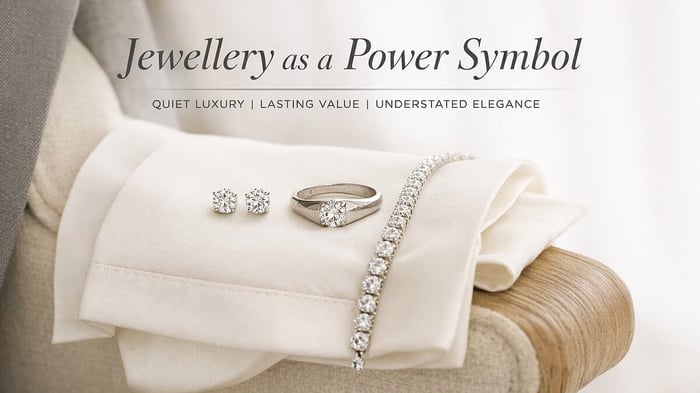
Power is a funny thing. We tend to picture it as loud, obvious, and slightly exhausting. A corner office. A raised voice. A chauffeured car and a “don’t you know who I am” attitude. But jewellery as a power symbol has always worked differently, because it doesn’t need loudness to be noticed.
In real life, the people who feel most in control rarely need to announce it. Their confidence is quieter, their choices steadier, and their signals often subtle. A beautifully cut jacket. Shoes that have clearly been cared for. A watch that looks like it has been on the wrist for years, not days.
Jewellery sits in that same category. It’s intimate, personal, and impossible to ignore once you’ve noticed it. It also carries a strange kind of authority because it’s worn on the body, not carried in a bag. A ring, chain, or pair of earrings becomes part of your silhouette. It moves with you. It quietly tells a story about what you value, what you can afford, what you belong to, and what you think is worth keeping.
That is why jewellery has always been a power symbol. Not because it makes you powerful, but because it is a visible shorthand for status, identity, and intent.
Let’s talk about what that means and how to choose pieces that feel confident rather than performative.
Why Jewellery Reads As “Power” In The First Place
Jewellery signals power in three overlapping ways. This is the bit most blog articles skip, but it’s the key to making sense of everything else.
1) Institutional power: belonging, rank, legitimacy
Think signet rings, regimental pieces, medals, crests, religious symbols, and cultural heirlooms. These do not say, “I bought this.” They say, “I am part of something.” They carry the weight of tradition, office, or identity, even if the piece itself is simple.
2) Economic power: resources, permanence, restraint
Precious metals and fine gemstones are portable wealth, but they also signal priorities. Someone who wears a high-quality piece daily is saying, “I invest in things that last.” In Britain, especially, that tends to read as more credible than flash.
3) Social power: taste, access, confidence
This is the quiet luxury layer. The power is not in size; it’s in selection. Pieces that look intentional, consistent, and well-made signal self-possession. They suggest you know what suits you, and you do not need approval.
When you combine those three, you get jewellery that feels like authority rather than costume.
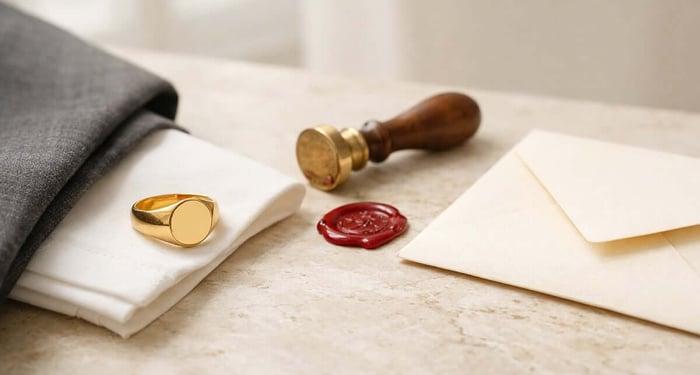 Identity and legitimacy: why signet rings still read as authority.
The Ring: The Most Direct Symbol Of Authority
If jewellery has a “power move”, it’s the ring.
Rings sit in the line of sight when you shake hands, gesture, hold a drink, or point something out. They’re also loaded with meaning. Commitment. Family. Office. Wealth. Taste. Sometimes all at once.
Signet rings: the original identity marker
Historically, the signet ring was not just decorative. It was functional. It sealed documents, validated messages, and carried a family crest or personal mark. That combination of identity and legitimacy is why signets still feel authoritative today.
In modern life, a signet ring can be traditional or quietly subversive. Worn properly, it says: heritage, confidence, and self-definition. Worn badly, it reads: "I watched one too many gangster films."
The difference is usually scale and styling. A modest signet in yellow gold, worn with ease, can look effortlessly “proper”. A giant, overly detailed crest can feel like fancy dress.
Wedding and engagement rings: social power in plain sight
It’s easy to overlook how much authority a wedding ring carries. It signals stability, chosen commitment, and social legitimacy. It can also signal values: tradition, loyalty, and maturity. None of that is universal, but culturally it still registers.
Engagement rings add another layer. They can read as romance, yes, but also as a declaration: “We are building something.” That has a power of its own.
And diamonds matter here because they sit at the intersection of symbolism and durability. A natural diamond is famously hard-wearing. It is designed, culturally and physically, to be worn for life.
Statement rings: presence, not shouting
A statement ring can be powerful when it’s chosen with restraint. In practice, that usually means one bold ring, not five. A clean setting. A stone that suits your hand. Something that looks deliberate rather than loud.
This scenario is where diamonds can work beautifully, even in smaller sizes. A well-cut diamond has a kind of visual authority because it catches light cleanly. It looks “considered” rather than fussy.
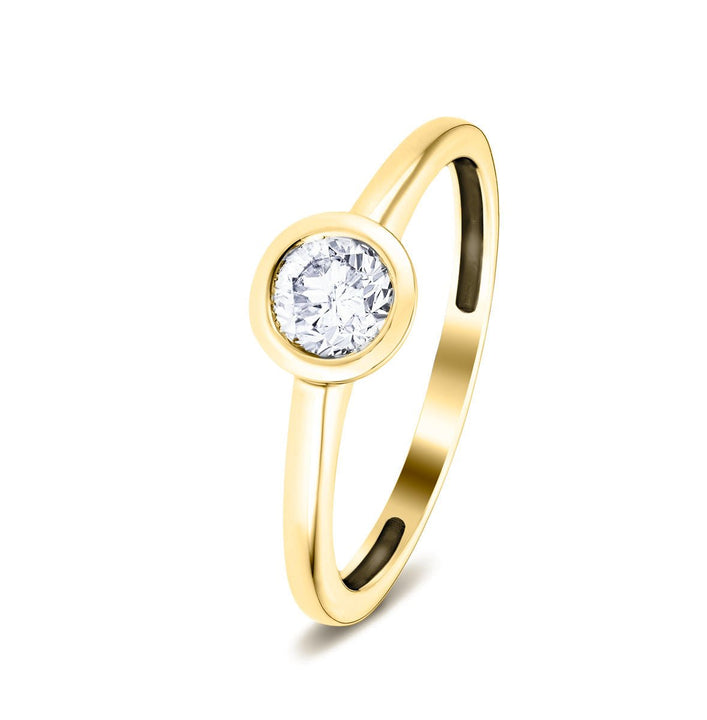
Certified Rub Over Diamond Solitaire Engagement Ring 1.00ct E/VS 18k Yellow Gold
£5,097.00
£8,637.00
Say goodbye to the same old style of engagement ring! With this solitaire diamond ring, you're guaranteed an exquisite diamond engagement ring that is as unique as you are. The 1.00 carat E/VS graded solitaire diamond in a rub over… read more
Chains And Necklaces: Strength, Visibility, And Cultural Code
Chains are fascinating because they mean different things in different contexts.
A thick chain worn openly can signal success, confidence, status, and sometimes dominance. Worn under a shirt, it can signal privacy, sentiment, faith, or simply a personal uniform.
The power of a chain is in how it’s worn
A chunky Cuban link chain makes a statement because it’s unapologetically visible. It can look fantastic, but it is also a specific style of language. If it doesn’t fit the person, it can look like borrowed confidence.
A finer chain is subtler, but it can be even more powerful when it reads as intentional. Think: a slim gold chain on bare skin in summer, or a chain that disappears under a collar and only flashes when someone moves.
The point is not the chain itself; it’s the coherence. Does it suit the wearer’s world, wardrobe, and manner?
Pendants: influence through meaning
Pendants have always carried power because they carry meaning. Religious symbols. Lockets. Talismans. Initials. A charm bought after a milestone. These say: my life has texture, and I remember what matters.
A diamond pendant can offer a very modern take on this. It’s not a crest, but it is a recognisable signal of value and permanence, with a softness that feels wearable.
Diamond Solitaire Necklace 1.00ct G/SI in 18k White Gold
£2,997.00
£5,397.00
This beautiful and elegant diamond solitaire necklace is a great gift for any occasion. This versatile piece is perfect for casual or formal wear and can be worn with any outfit. This stunning and fashionable piece is made from 18k… read more

Earrings: the quietest form of authority
Earrings are interesting because they are often underestimated. They sit close to the face, which means they shape how someone is perceived almost instantly.
A good pair of earrings can make someone look more polished in a way that is hard to pin down. That, in itself, is a form of social power.
Diamond studs: the ultimate quiet-power piece
If there is one piece of diamond jewellery that consistently reads as “put together”, it’s the diamond stud. Not because it’s flashy, but because it’s timeless, easy, and unmistakably “real”.
They also work across contexts. Office. Dinner. Weekend. A pair of diamond studs can become a personal uniform, which is exactly how power dressing works.
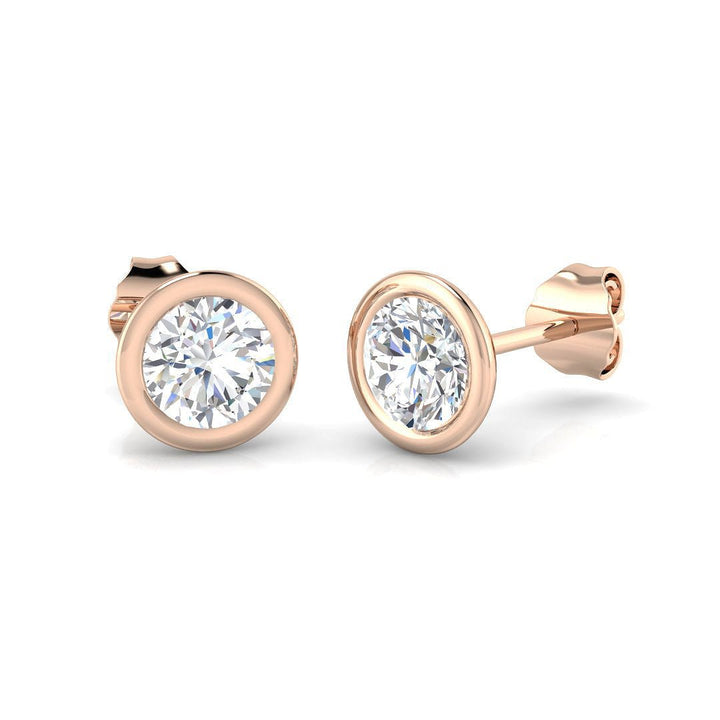
Diamond Rub Over Stud Earrings 1.00ct G/SI Quality in 18k Rose Gold
£2,647.00
£4,797.00
The warm beauty of 18k rose gold clasps a whole carat of shimmering diamonds in these outstanding examples of the classic diamond stud design. With their timeless versatility, they will be a beautiful finishing touch to every outfit and are… read more
Materials That Command Respect (And Why)
We talk about jewellery like it's purely aesthetic, but materials carry cultural meaning. Even people who “know nothing about jewellery” respond to it instinctively.
Yellow gold: tradition, warmth, old-world confidence
Yellow gold reads as classic and established. It can signal tradition, heritage, and a certain ease. It also tends to look best when it’s not competing with too many trends.
White gold and platinum: modern authority, clean restraint
White metals tend to read as contemporary and understated. Platinum, in particular, has a calm seriousness. It’s not loud, but it has presence.
Diamonds: permanence, clarity, and cultural shorthand
Diamonds are powerful, not because they are geologically rare. They are powerful because they are culturally loaded and physically durable.
A diamond says, 'This is worth keeping.' It combines the romance of tradition with the practicality of everyday wear. A well-chosen natural diamond piece becomes part of a life, not just part of an outfit.
Coloured gemstones: distinction and identity
Sapphires, rubies, and emeralds have long been associated with royalty and prestige. Today, they often signal individuality. They can be power pieces when they feel personal rather than theatrical.
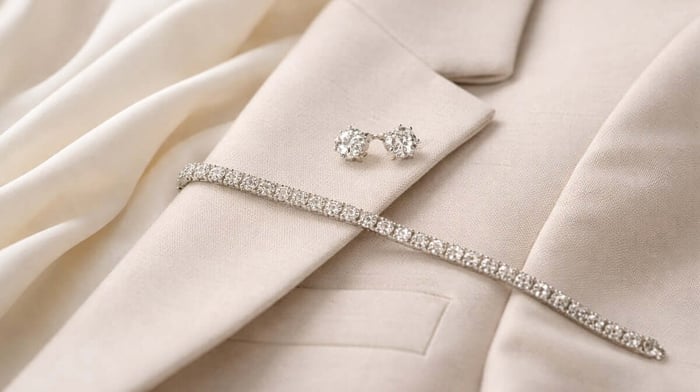 Quiet power: pieces you can wear every day without shouting.
The Difference Between Power And Performance
Here is the trap: many people try to “dress for power” by copying a look that signals power on someone else.
The problem is that power jewellery is not a costume. It only works when it aligns with the wearer.
Real power signals are consistent. They repeat. They become part of someone’s normal rather than their “special occasion version”.
That’s why the most powerful jewellery wardrobes often look boring on paper:
One ring that never comes off
One chain worn most days
One pair of earrings that always works
One bracelet that looks like it belongs
It is not about variety. It is about identity.
How To Choose A Power Piece Without Looking Like You’re Trying
If you want jewellery that feels authoritative, start here.
1) Choose one anchor, not a whole new personality
Pick one piece that can become part of your weekly life. A ring. A pendant. Stud earrings. A bracelet. Something you can wear often without thinking.
2) Let proportion do the work
A power piece should look like it belongs on you. Bigger is not always better. The right scale is what creates confidence.
3) Prioritise craftsmanship and comfort
If it pinches, catches, snags, or feels flimsy, you will never wear it with ease. Comfort is part of authority. If you’re constantly adjusting a piece, it owns you, not the other way round.
4) Keep it coherent with your wardrobe
If you live in knitwear, denim, and trainers, a highly ornate ring may feel out of place. If you live in tailoring, something too playful can look out of place. The most powerful jewellery looks like it was always meant to be there.
5) If you’re choosing diamonds, let the cut and setting lead
For everyday diamond jewellery, classic settings are the winner because they remain elegant for years. A well-cut stone gives you brightness without needing size, and a clean setting keeps it wearable.
Classic Diamond Tennis Bracelet 1.50ct G/SI in 18k Yellow Gold
£1,997.00
£3,507.00
This elegant bracelet showcases the brilliance of diamonds to perfection. The 1.50ct of ethically sourced G/SI quality diamonds glisten in the contemporary claw settings handcrafted in 18K yellow gold by our skillful UK artisans. This pretty bracelet will be a… read more

A Final Thought: Power Is Often Simply Composure
Jewellery as a power symbol is not about dominance. It’s about composure.
It’s the feeling that you are not scrambling. That you know who you are. That you choose things with care, keep them, and wear them well.
Sometimes that’s a signet ring handed down through a family. Sometimes it’s a pair of diamond studs you bought for yourself after a hard-earned promotion. Sometimes it’s an engagement ring that quietly tells the world: this matters.
The best pieces do not shout. They stay.
Browse Timeless Diamond Pieces That Signal Quiet Confidence
If you’re drawn to jewellery that feels elegant, enduring, and genuinely wearable, start with the classics. They are classics for a reason: they flatter, they last, and they never look like a costume.
Explore our natural diamond favourites, from refined rings to everyday essentials:Browse Natural Diamond Stud Earrings
Browse Natural Diamond Signet Rings Browse Natural Diamond Tennis Bracelets
FAQs
Do signet rings have to be engraved?
No. Traditionally, signet rings were engraved with a family crest, initials, or a personal emblem so they could be used to seal documents. Today, plenty of people wear them plain. A smooth signet can look more modern and understated, and it’s a good choice if you want the shape and presence without the formality of a crest.
Which finger do you wear a signet ring on?
There’s no single rule, but tradition gives you a few “accepted” options. The most classic placement is the little finger (pinky), often on the non-dominant hand. Some people wear a signet on the ring finger (especially if it’s an heirloom) or the index finger if they want it to read more boldly. The best answer is the one that feels natural with how you dress and use your hands, because confidence matters more than etiquette.
Are diamond studs timeless or trendy?
Diamond studs are about as timeless as jewellery gets. Their appeal is simple: they frame the face, work with nearly any outfit, and never look out of place. Trends come and go in terms of size, setting style, or whether people stack multiple piercings, but the idea of a clean, well-cut diamond close to the ear is permanently wearable.