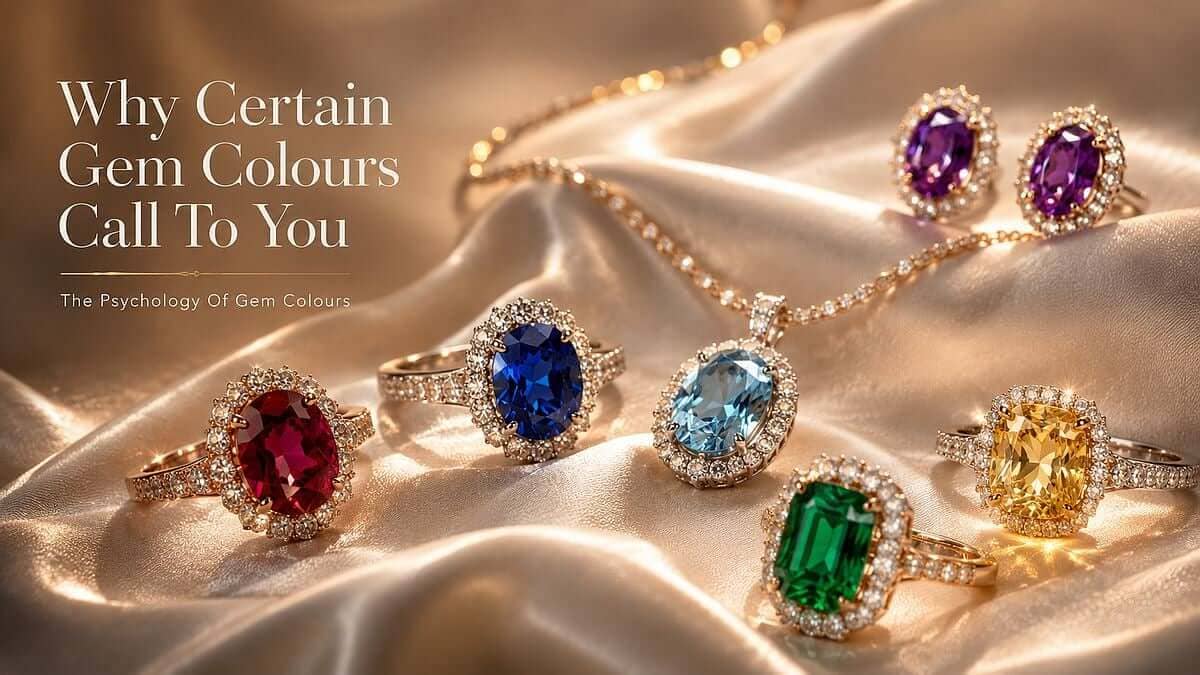

Some jewels seem to announce themselves. A ruby catches the eye like a velvet curtain opening. A sapphire settles the gaze. An emerald has the quiet confidence of a garden after rain. Aquamarine feels clean, cool and composed. A yellow diamond seems to hold a little sunlight of its own. Gem colours have their own language; they talk to our emotions.
We may talk about gemstone colour as a matter of taste, but it often feels more intimate than that. We often see this when customers compare coloured pieces side by side. The conversation starts with beauty but very quickly becomes more instinctive: which colour feels confident, which feels calm, and which feels like the version of oneself one wants to carry into the room?
That is why coloured gemstone jewellery can feel so compelling. It gives beauty a point of view. Diamonds bring brilliance, structure and refinement. Gemstones bring tone, character and atmosphere. Together, they create pieces that feel less like decoration and more like a signature.
Watch: The Mood Of Gem Colours
A short visual companion to the article, exploring how gemstone colour changes the mood, symbolism and personal feeling of fine jewellery.
Table of Contents
- Why Gem Colours Feel So Personal
- The Luxury Insight: Colour Is Never Just Decoration
- The Gemmology Behind Colour
- Red, Blue And Green: The Classic Emotional Triad
- Yellow, Purple And Pink: Light, Mystery And Softness
- White Diamonds And The Art Of Clarity
- How To Style Gem Colours With Diamonds
- Choose A Colour With Conviction
- Find The Gemstone Colour That Speaks To You
- Gem Colour FAQs
Why Gem Colours Feel So Personal
Colour reaches us before language does. We feel warmth before we analyse red. We sense calm before we describe blue. We recognise freshness before we explain green. In jewellery, that instinctive response is part of the pleasure. A coloured gemstone does not simply sit against the skin. It changes the mood of the piece, and sometimes the mood of the wearer.
Modern colour psychology is careful rather than mystical. It does not suggest that one shade has the same effect on every person in every setting. Context, culture and memory all matter. Still, research into colour and psychological functioning recognises that colour can influence feeling, attention and behaviour. Jewellery adds another layer, because the colour is not seen in isolation. It is worn, chosen, touched and remembered.
This is where gemstone colour becomes more than a design choice. A ruby ring may feel bold because of its colour but also because rubies have long been associated with passion, status and vitality. A sapphire bracelet may feel composed because of its blue tone but also because sapphires have centuries of cultural weight behind them. The stone and the story work together.
There is a reason the same few colours keep returning to fine jewellery again and again. Red, blue, green, yellow and white are not passing decorative moods. They are among jewellery’s strongest emotional registers, and the best pieces know how to use them without apology.
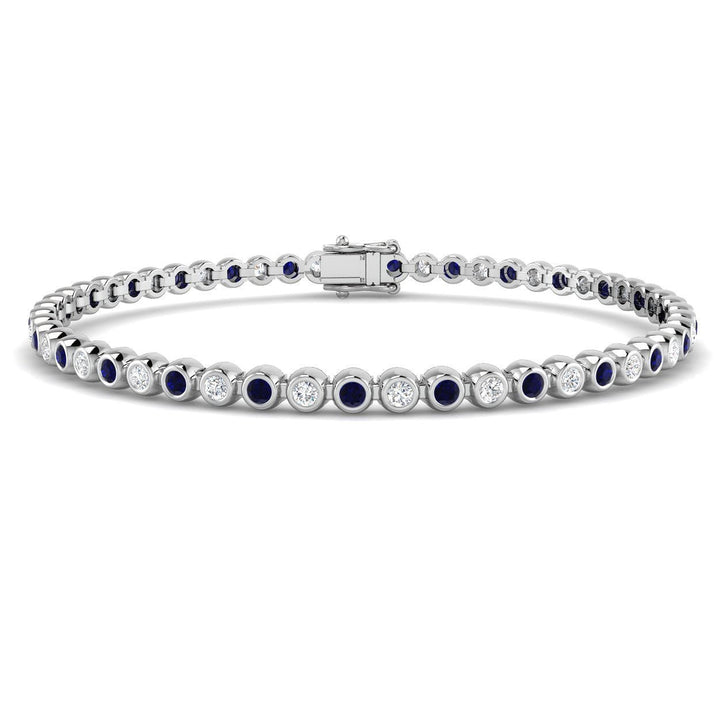
Sapphire & Diamond Tennis Bracelet 2.25ct in 18k White Gold
£2,497.00
£4,497.00
Handcrafted elegance overflows in this stylish sapphire and diamond tennis bracelet. 1.05 carats of sparkling and ethically sourced diamonds are set alongside bright and gleaming sapphires in a rub-over bezel setting on brilliant 18k white gold, which is sure to… read more
The Luxury Insight: Colour Is Never Just Decoration
In fine jewellery, colour gives a piece its emotional temperature. Diamonds are prized for light, fire and clarity, but coloured gemstones introduce a different kind of expression. They soften, intensify, brighten or deepen the design around them.
This is why diamond and gemstone pairings are so enduring. Diamond accents act almost like punctuation. They frame the colour, sharpen its outline and bring luminosity to the whole jewel. In a ruby and diamond ring, the diamonds make the red feel more vivid. In an aquamarine pendant, they give the blue a cleaner, brighter edge. In emerald earrings, they add contrast to a green that might otherwise feel velvety and dense.
All Diamond has already explored the elegance of diamond and gemstone pairings, and colour psychology gives that idea a more personal dimension. The question is not only which stones work together visually. It is a combination that has enough presence to hold the design together.
For some buyers, coloured gemstones offer a way into more individual fine jewellery without losing refinement. A classic diamond piece is timeless, but colour gives it a sharper identity.
That distinction matters. The strongest coloured gemstone jewellery is rarely the safest or most neutral option. It is the piece with enough conviction to make the wearer look more considered, not merely more adorned.
The Gemmology Behind Colour
The emotional response to colour may feel instinctive, but the colour itself is often the result of precise natural chemistry. Gemstone colour is shaped by trace elements, crystal structure, light absorption and the way a stone is cut.
The GIA Gem Encyclopedia is a useful reference for understanding how different gemstones acquire their colours. Ruby, for example, is red because chromium enters the structure of corundum. Sapphire is also corundum, but its blue colour is commonly associated with iron and titanium. Emerald belongs to the beryl family and gains its green from trace elements such as chromium and vanadium. Aquamarine, also a beryl, is loved for blue to greenish blue tones that depend partly on iron and partly on how the stone is cut.
That scientific foundation matters because it reminds us that colour is not simply applied to a gemstone. It belongs to the stone’s nature. It is part of its formation, its rarity and its beauty. In well-made jewellery, the craft of the setting then decides how that colour is revealed.
A jeweller must think about metal tone, diamond contrast, stone size and the balance of light around the centre gem. Yellow gold can make ruby or emerald feel warmer and more romantic. White gold or platinum can sharpen sapphire and aquamarine. Diamond halos can intensify colour by drawing light around the stone.
That matters. Colour is not only chosen. It is handled. A beautiful gemstone can look ordinary in the wrong setting, while a well-judged design can make colour feel inevitable.
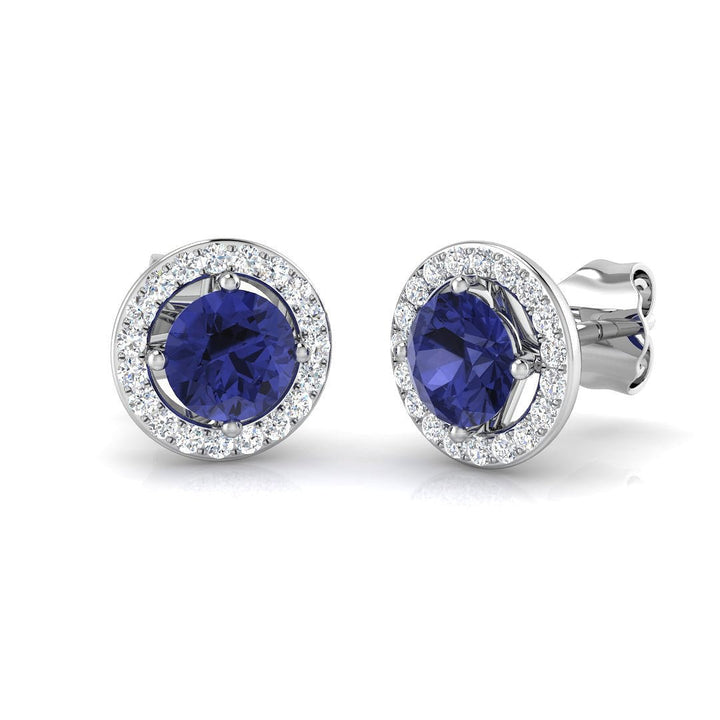
1.35ct Tanzanite & Diamond Round Cluster Earrings 18k White Gold
£777.00
£1,167.00
Elegance is the hallmark of these stunning tanzanite and diamond earrings. They are perfect for everyday wear. These gorgeous earrings have a UK hallmarked 18k white gold setting, which is highlighted by 1.15ct of round-shaped tanzanites encircled by a dazzling… read more
Red, Blue And Green: The Classic Emotional Triad
Red gemstones are the most emotionally direct. Ruby, garnet and red spinel all carry a sense of heat, confidence and presence. A ruby and diamond ring can feel romantic, but it can also feel assertive. Red does not disappear politely into an outfit. It asks to be noticed.
This makes red especially effective in rings, where the stone is seen often by the wearer as well as by others. A ruby ring can feel like a private reminder of courage, desire or resolve. It suits jewellery with emotional intensity, but it is most elegant when balanced by a refined setting and proportionate diamond details.
Blue gemstones speak more quietly. Sapphire and aquamarine both sit within the blue family, but they do not express the same mood. Sapphire is deeper, more formal and more composed. It has the authority of tradition. Aquamarine is lighter, clearer and more relaxed. It feels closer to air and water than to ceremony.
Green gemstones, especially emeralds, carry a different kind of depth. Emerald has long been associated with growth, renewal and natural abundance. In jewellery, it can feel serene but not passive. It is rich, cultivated and quietly distinctive. The V&A’s jewellery collection offers a useful reminder that jewels have always carried social and cultural meaning as well as beauty.
Of the three, ruby is usually the most assertive, sapphire the most controlled and emerald the most cultured. That is not a rule, but it is a useful starting point. When in doubt, the best choice is often the one with the clearest character.
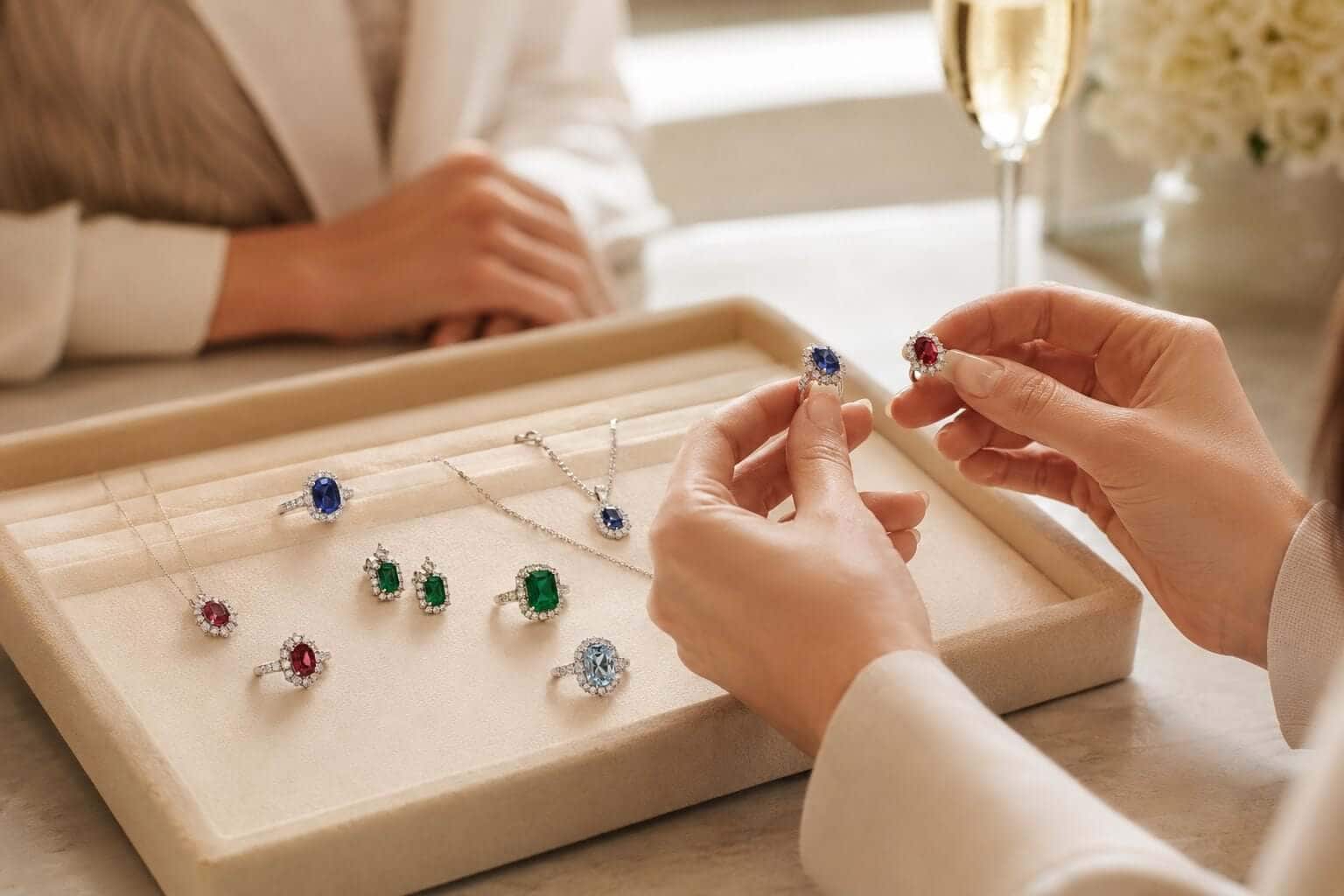
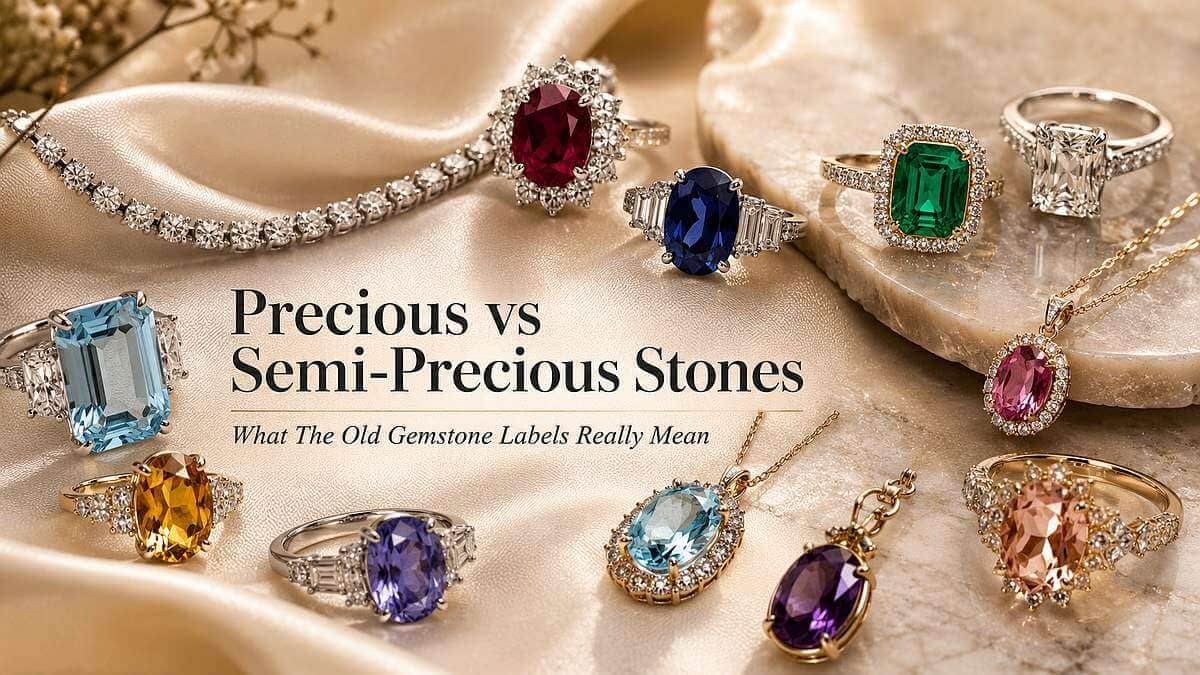
Seeing coloured gemstones together often makes their different moods clearer: ruby feels assertive, sapphire composed, emerald cultivated and aquamarine serene.
Colour With Presence
If you are drawn to colour with depth and feeling, explore pieces where natural diamonds frame the gemstone rather than compete with it.
Yellow, Purple And Pink: Light, Mystery And Softness
Yellow gemstones and yellow diamonds bring light into jewellery in a very particular way. They feel optimistic, expressive and warm. A yellow diamond ring can be glamorous without feeling heavy, especially when set with white diamonds that heighten the contrast. Yellow is also surprisingly versatile in fine jewellery because it can work with both white and yellow metals, depending on whether the design wants crispness or warmth.
Purple gemstones, such as amethyst and tanzanite, tend to feel more introspective. Purple has long carried associations with creativity, ceremony and mystery. In modern jewellery, it can feel individual without being loud. It is particularly effective when the design is kept clean, allowing the colour itself to provide the character.
Pink gemstones bring a softer emotional register. Pink sapphire, morganite and other blush-toned stones can suggest affection, self-expression and warmth without the intensity of red. Pink is not always delicate, though. In a confident setting, it can feel polished and modern rather than simply romantic.
These colours are best when they are not over-explained. A yellow diamond does not need to be justified if it brings light to the hand. A purple gemstone does not need to behave like a classic sapphire. Some colours work because they refuse to become background.
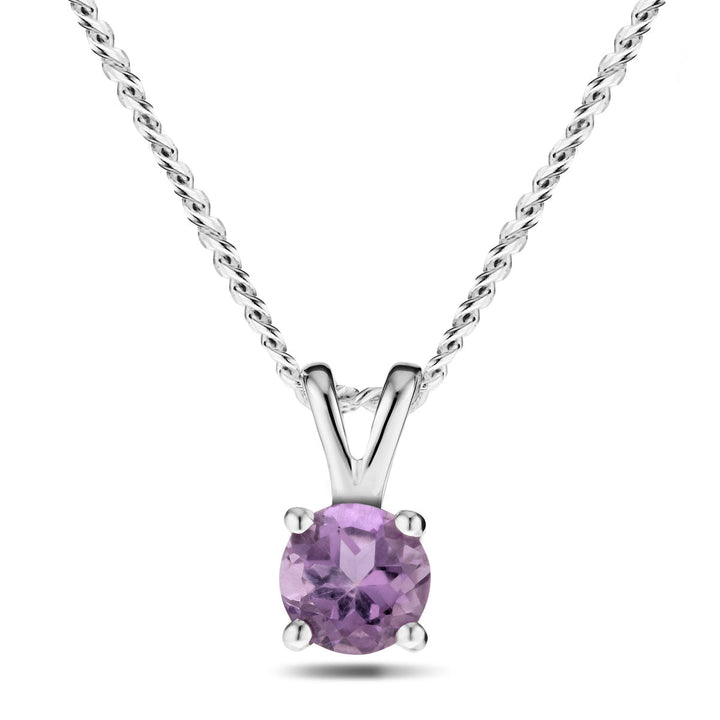
Amethyst Solitaire Necklace Pendant 0.45ct in 9k White Gold 5.0mm
£197.00
£247.00
Ever worn a piece of jewellery that everyone admires and wants to touch? That's the feeling we get when we wear this amethyst solitaire necklace! The solitaire amethyst gemstone weighs 0.45 carats and has a diameter of 5.0 mm, which… read more
White Diamonds And The Art Of Clarity
White diamonds occupy a special place in the colour conversation because they are not colourless in the emotional sense. They carry their own associations: clarity, refinement, structure and light. A white diamond does not introduce a hue in the way ruby or emerald does, but it can amplify everything around it.
That is why diamonds are such natural companions for coloured gemstones. They sharpen the outline of a sapphire, brighten the coolness of aquamarine, frame the richness of ruby and lift the depth of emerald. In coloured gemstone jewellery, diamonds often do the elegant work of restraint. They make colour feel finished.
There is also a visual pleasure in the contrast. A vivid gemstone surrounded by diamonds feels intentional. It gives the eye somewhere to rest and somewhere to return. The colour becomes the voice. The diamonds become the discipline around the colour.
This is why diamond accents should not be treated as afterthoughts. In coloured gemstone jewellery, they are often what separates a pretty coloured stone from a properly finished jewel.
How To Style Gem Colours With Diamonds
The easiest way to wear coloured gemstones well is to let the colour lead. Choose one dominant tone and build the rest of the look around it. A ruby ring needs little competition. It can sit beautifully with a diamond bracelet or simple diamond studs. A sapphire and diamond bracelet can be the cool, composed anchor of an outfit. Emerald earrings can bring colour near the face in a way that feels quietly dramatic.
Metal tone also changes the message. Yellow gold warms red, green and yellow gemstones, making them feel richer and more intimate. White gold or platinum gives blue and aquamarine stones a cleaner, more modern edge. Mixed metal styling can work, but the gemstone should still feel deliberate rather than accidental.
For daytime, smaller coloured gemstone pieces often have the most elegance. A diamond and aquamarine pendant can bring freshness to a blouse, knit or white shirt. Emerald and diamond earrings can make a simple black dress feel considered. A sapphire bracelet can add polish without feeling ornate.
For the evening, colour can be stronger. Ruby, yellow diamond and emerald all respond well to low light because they bring depth and contrast. The key is to avoid making every piece compete. One expressive jewel is usually more powerful than several shouting at once.
Readers interested in a broader seasonal view may also enjoy All Diamond’s guide to fine jewellery colour trends in 2026, which places coloured gemstones within a wider style context.
The styling principle is simple: let the gemstone do the work. If the colour is strong, the rest of the jewellery should support it, not dilute it.
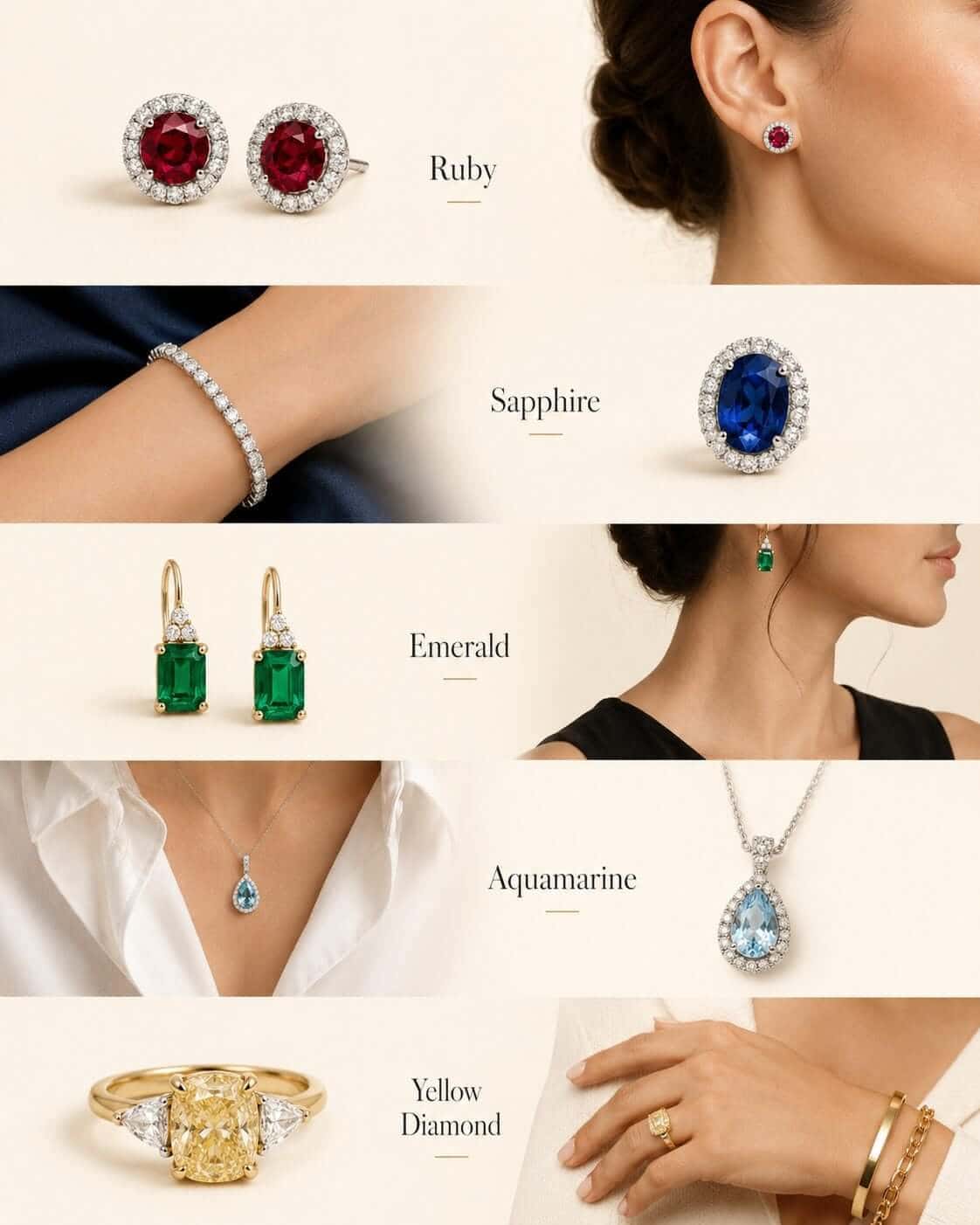
The most elegant styling approach is to let one gemstone colour lead, with diamonds and metal tones supporting the mood of the piece.
Choose A Colour With Conviction
The most elegant gemstone choice is not always the one that follows a rule too obediently.
It is the one that feels intentional, with presence, proportion, and a clear reason for being there.
A ruby should feel vivid, not timid. A sapphire should feel composed, not flat. An emerald should have richness. An aquamarine should bring freshness. A yellow diamond should look intentional, not merely unusual.
One customer once described choosing between sapphire and aquamarine as choosing between “poise and air”. That is a useful distinction. The right colour is not just about matching a wardrobe. It changes the atmosphere of the jewel.
Fine jewellery should be beautifully made, but it should also have conviction. Colour gives diamonds a different kind of expression. When natural diamonds frame a coloured gemstone well, the result can be refined, expressive and far more memorable than a safer choice.
Find The Gemstone Colour That Speaks To You
Explore coloured gemstone jewellery where natural diamonds bring light, structure and refinement to richly personal colour. Whether you are drawn to ruby, sapphire, aquamarine, emerald or yellow diamonds, choose the piece with the colour, character and presence to be cherished for years.
Sapphire and diamond bracelets
Gem Colour FAQs
Why am I drawn to certain gemstone colours?
You may be responding to a mix of personal taste, memory, symbolism, wardrobe habits and the emotional associations of colour. Gemstone choice often feels instinctive because colour is processed quickly and emotionally.
Do gemstone colours have fixed meanings?
No colour has one fixed meaning for everyone. Red often suggests passion or confidence, blue often feels calm or composed, and green often suggests renewal, but culture, styling and personal experience all affect interpretation.
Which gemstone colour feels most timeless?
Sapphire blue, ruby red and emerald green are among the most enduring colours in fine jewellery. They have strong historical associations and pair beautifully with natural diamonds.
Are yellow diamonds easy to wear?
Yes, especially when the design is well balanced. Yellow diamonds can feel warm, bright and elegant, particularly with white diamond accents or thoughtfully chosen gold settings.
How should I choose between ruby, sapphire, emerald and aquamarine?
Think about the mood and visual strength you want the jewellery to carry. Ruby feels bold, sapphire composed, emerald rich and cultivated, and aquamarine light, fresh and serene.
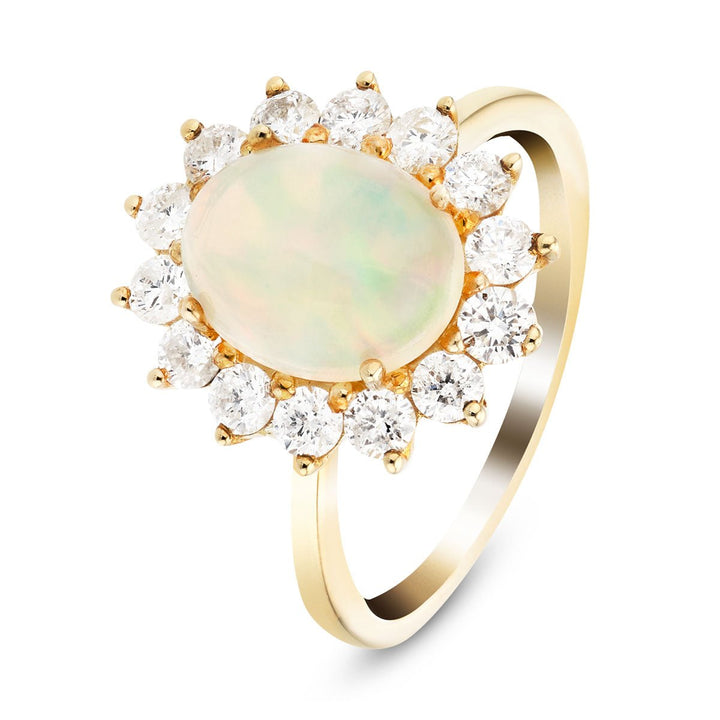
Opal 1.49ct and Diamond 0.82ct Cluster Ring in 9K Yellow Gold
£967.00
£1,627.00
This opal and diamond cluster ring in yellow gold is a classic yet modern ring that will look fabulous on your finger. The opal in the centre gives off a stunning creamy colour with iridescent highlights, and the diamonds clustered… read more