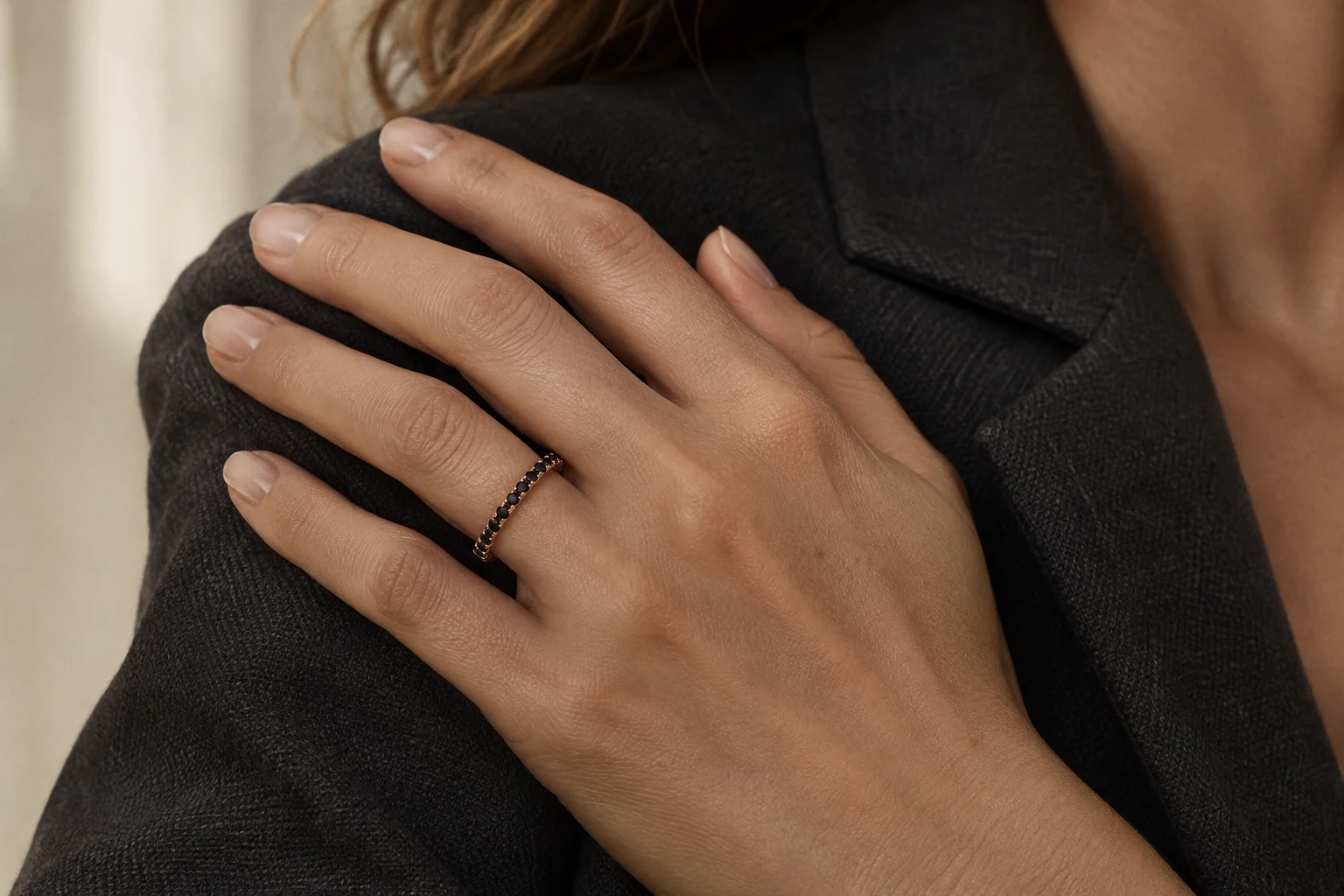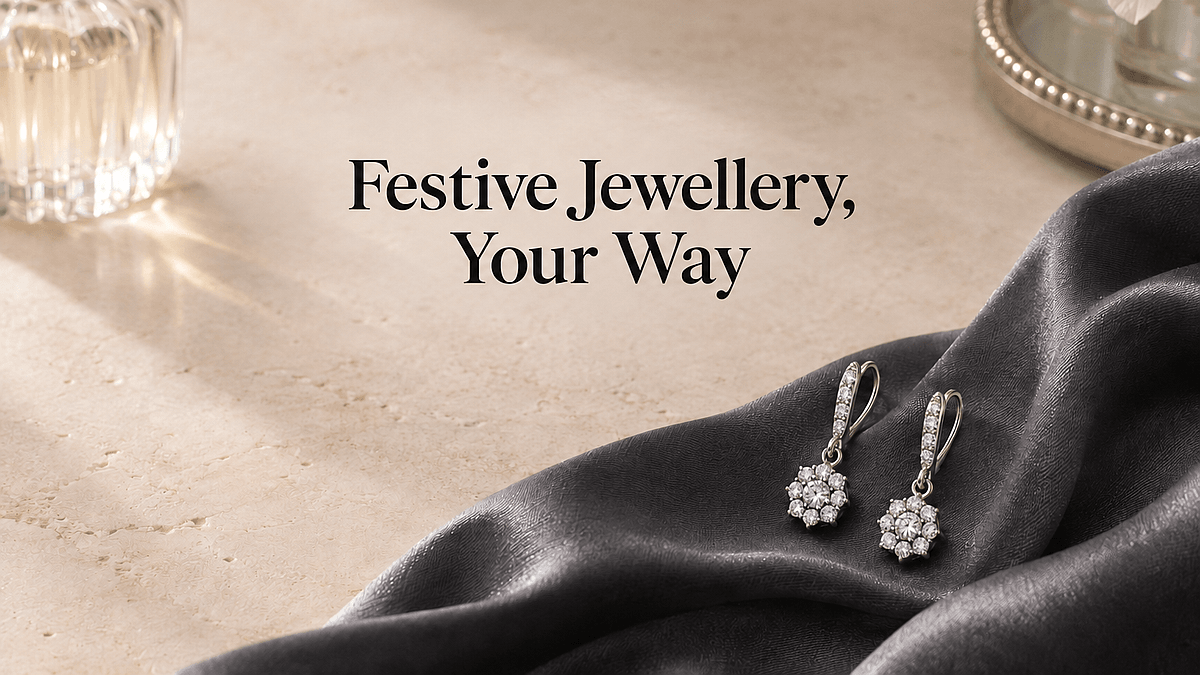
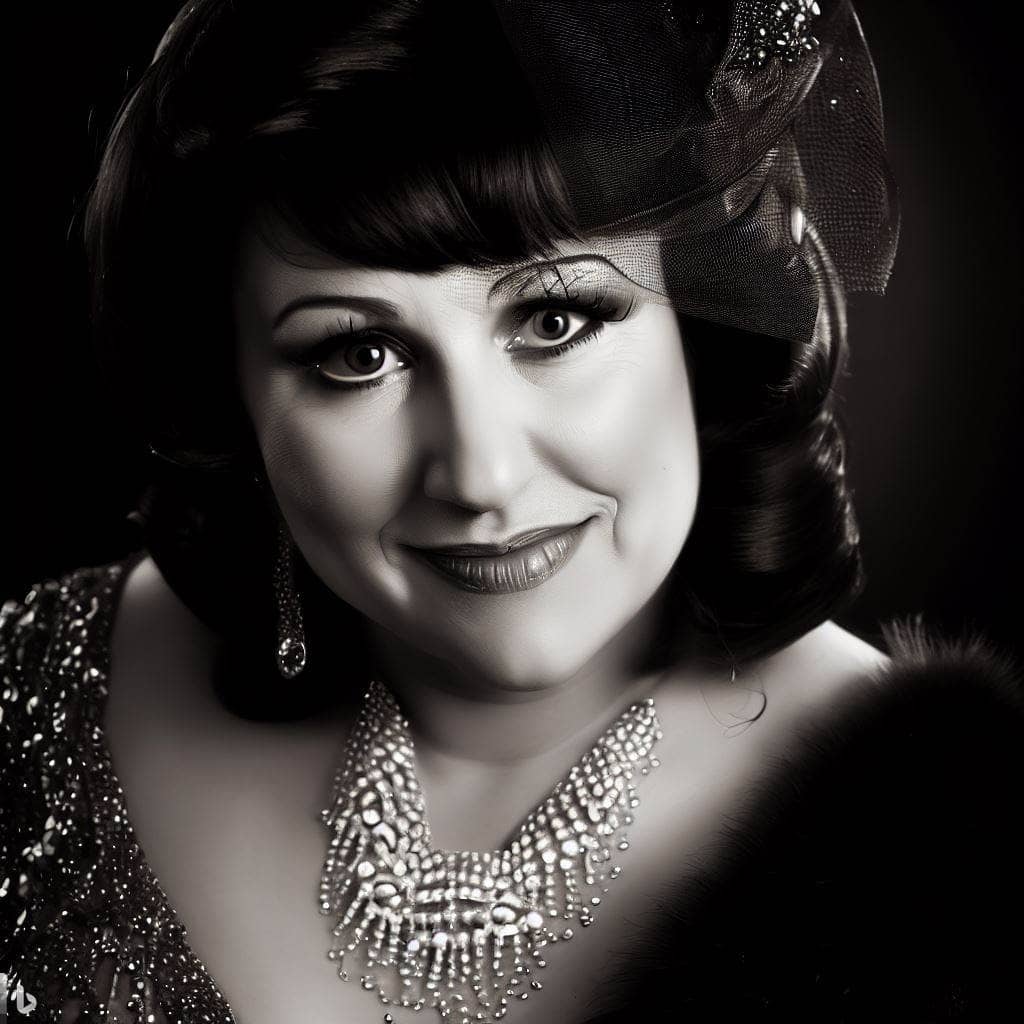
The coat is waiting by the door, the room beyond it will be warm, and the outfit you know so well needs one detail to feel ready. Festive jewellery can supply that change without turning you into somebody else. A small fall of diamonds beside the face, a ruby on the hand or a fine bracelet at an uncovered wrist may be quite enough.
The useful starting point is the invitation. A standing reception, an evening around a dinner table and a family lunch ask different things of what you wear. Choose the part of the outfit that will remain visible and enjoyable once you arrive, then give it a little attention.
Table Of Contents
Start With The Evening You Will Actually Have
An invitation tells you more than its dress code. Consider whether you will spend the evening seated, moving between rooms or wearing a jacket for much of the time. Jewellery that disappears beneath a cuff may still be personally meaningful, but it is unlikely to be the detail that changes the whole outfit.
For a dinner, earrings and a ring can give the face and hands a deliberate finish. At a drinks reception, a pendant has more room to register against a plain neckline. For a relaxed lunch, a familiar pair of earrings may feel more convincing than a complete new set.
There is no obligation to make every occasion equally formal. Choose one piece you would miss if you took it off. Let that be the starting point, and add a companion only if it improves the arrangement.
Let The Neckline Decide Where Light Belongs
A high neckline already occupies the space where a pendant might sit. Earrings can bring light nearer the face without competing with the fabric. With an open collar, consider the line between the necklace and the opening: does the pendant sit clearly within it, or meet the edge in an awkward place?
A drop earring can give a plain dress a more evening-oriented mood. Judge the complete length and width, rather than diamond weight alone, and consider how it sits beside your hair. A catalogue close-up establishes the design; a photograph on a person, where available, is more useful for understanding its apparent scale.

The cluster drops here illustrate how several small diamonds can form a graduated vertical outline. They offer a design reference for a bare neckline or an uncomplicated collar.

Design Example
Diamond Cluster Drop Earrings 0.50ct G/SI Quality set in 18k White Gold
In 18k white gold, these graduated cluster drops contain 0.50ct of natural diamonds in total across the pair, listed as G/SI. Several round-diamond clusters form the outline; this is not a pair of 0.50ct solitaire drops.
Find A Clear Line Beside The Face
Explore diamond earrings by outline, then check the dimensions of the pair that interests you.
Use Colour As A Personal Detail
Red jewellery does not need to be part of a red-and-green Christmas formula. A ruby can sit quietly against cream, midnight blue or a black sleeve. If your clothes already carry a strong pattern, a ring lets you introduce colour at a little distance from it.
Look at how the diamond accents frame the coloured stone. A halo gives the ruby a bright perimeter; a three-stone design makes a different, more open composition. Neither needs matching earrings to make sense. A pair you already own may be the better companion.
The ruby ring selected here is a useful example of a concentrated colour accent. Its diamond halo brings a separate outline around the oval centre, rather than asking the red stone to carry every part of the design.

Design Example
Ruby 0.50ct and Diamond 0.10ct Ring In 9K Yellow Gold
This 9k yellow gold ring pairs a 0.50ct oval ruby with 0.10ct of natural diamonds in total around it. The halo is a useful illustration of a bright border framing one concentrated area of red.
Give The Wrist A Clear Place
A bracelet is easier to appreciate when it has some space between the sleeve and hand. Try your intended cuff position before choosing a piece for an evening outfit. If the garment covers the wrist whenever you move, earrings or a ring may make more of the occasion.
Fine chain and larger diamond outlines create different visual effects. A spaced design leaves visible metal and open intervals between the stones. That can be an appealing companion to a ring, particularly when you want a quieter wrist than an uninterrupted line of diamonds.
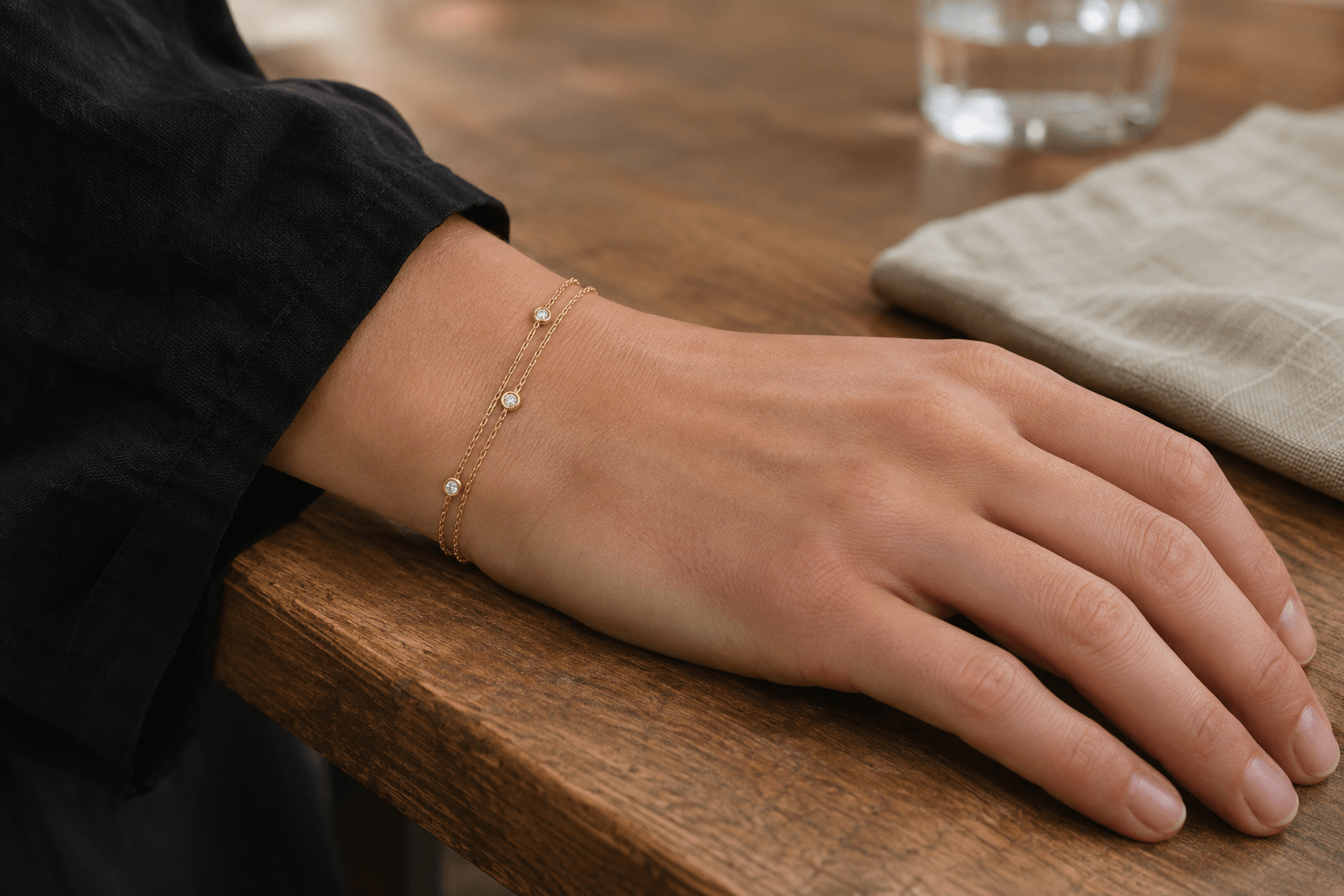
The double-chain bracelet below shows that spaced effect. Its appeal here is the relationship between the yellow gold, small round diamond stations and the open areas between them. The photograph supports that visual observation; it does not establish how the bracelet will fit or feel on your wrist.

Design Example
Diamond Double Chain Bracelet 0.25ct G/SI 18k Yellow Gold
The 18k yellow gold double-chain bracelet is listed with ten round diamonds weighing 0.25ct in total, in G/SI quality. The spaced bezel-set stations show how a bracelet can leave room for the gold and the gaps between its diamonds.
Try The Whole Arrangement Before Leaving
Put the jewellery on with the actual clothes, including the layer you will wear indoors. Check the outfit seated as well as standing, with your hair as you intend to wear it. Let a necklace settle naturally before deciding whether its length works.
Notice ordinary points of contact. Does an earring meet a high collar when you turn your head? Does a ring catch against a delicate fabric? Does a bracelet sit where you want it when your arm rests on the table? These are questions for a real fitting, not qualities that can be guaranteed from a product photograph.
If you are buying specifically for an event, ask the jeweller about the dimensions, fastening, size and likely delivery date for that exact piece. Check the current terms before committing. A general delivery statement is not confirmation that a particular item will reach you before your invitation.
For a broader approach to colour and fabric, our winter gemstone jewellery guide offers another starting point. For a piece you hope to wear throughout the year, consider how it fits into a personal fine jewellery collection.
A Small Change Can Be Enough
The most satisfying festive piece often makes familiar clothes feel newly considered. You recognise yourself in the mirror, but the outfit has acquired a little light or colour. When the evening ends, that same jewel should still have a place in your life. Choose it with that quieter future in mind.
Choose The Detail You Will Enjoy Again
Begin with the place your outfit leaves open, then explore a diamond design or a personal point of ruby colour.
Frequently Asked Questions
How Much Jewellery Should I Wear To A Christmas Party?
Start with one focal piece and assess the whole outfit before adding more. The neckline, fabric and formality are more useful guides than a fixed number of pieces.
What Jewellery Works With A High Neckline?
Earrings or a ring can provide a clear detail when a pendant would compete with the fabric. Check that drop earrings do not meet the collar when you move.
Can I Wear Ruby Jewellery Without A Matching Set?
Yes. A ruby ring can stand alone or sit beside simple diamond earrings. Repeating the exact gemstone in every piece is a preference, rather than a requirement.
Does A Higher Diamond Weight Mean Bigger Earrings?
Not necessarily. Total diamond weight describes the combined mass of the diamonds, not the complete dimensions of the earrings. Check length, width and the arrangement of the stones.
What Should I Check When Buying Jewellery For An Event?
Confirm the selected metal, dimensions, size or chain length, fastening and current delivery information for the exact item. Try the complete outfit before the occasion.