
A diamond bracelet makes its entrance in the light. Its second impression is quieter: the way it settles against your wrist, the movement of its links and whether you can fasten it without turning an ordinary morning into an exercise in patience.
That second impression deserves more attention. Luxury diamond bracelets are made to be seen, but they are also worn against moving skin, beneath sleeves and beside the objects we use every day. The right piece should make sense in that life, not only in a display.
A photograph and a carat figure are a beginning. To make a confident choice, look for the details you will notice after the first admiring glance.
At A Glance: Look beyond total diamond weight. Compare the line, movement, fit, setting and clasp in the ordinary situations in which you plan to wear the bracelet.
In This Article
Judge The Line Before The Number
A bracelet can create an almost continuous line of light, or a lighter rhythm in which diamonds are separated by visible chain. Decide which effect you enjoy before making total diamond weight the centre of your comparison.
In a tennis bracelet, look along the design rather than concentrating on one bright section. Ask whether the succession of stones and settings feels balanced to your eye. In a more open chain design, notice the spaces as well as the diamonds. Those pauses may be exactly what makes the piece feel relaxed enough for you.
Total carat weight is not the size of every stone. All Diamond's product guidance specifies that the weight given for a multi-diamond piece is the combined weight of its diamonds. A larger total can therefore describe a different arrangement, not merely a larger version of the bracelet beside it.
Read the stated width and length as well. They turn an attractive photograph into a more useful idea of what might arrive. The aim is not the biggest number; it is the line you want to see on your wrist.
Give A Tennis Bracelet Room To Move
A flexible bracelet needs to follow you. During a try-on, let it settle naturally rather than holding it in the position that looks best. Turn your wrist, relax your hand and then bend it gently. Notice whether the bracelet stays comfortable through those ordinary movements.
Ask the jeweller to show how the links articulate. You are looking for a design that moves as intended, without an awkward section that repeatedly catches or folds in a way that concerns you. Do not twist or pull the bracelet to test its strength; a demonstration is more useful than a stress test.
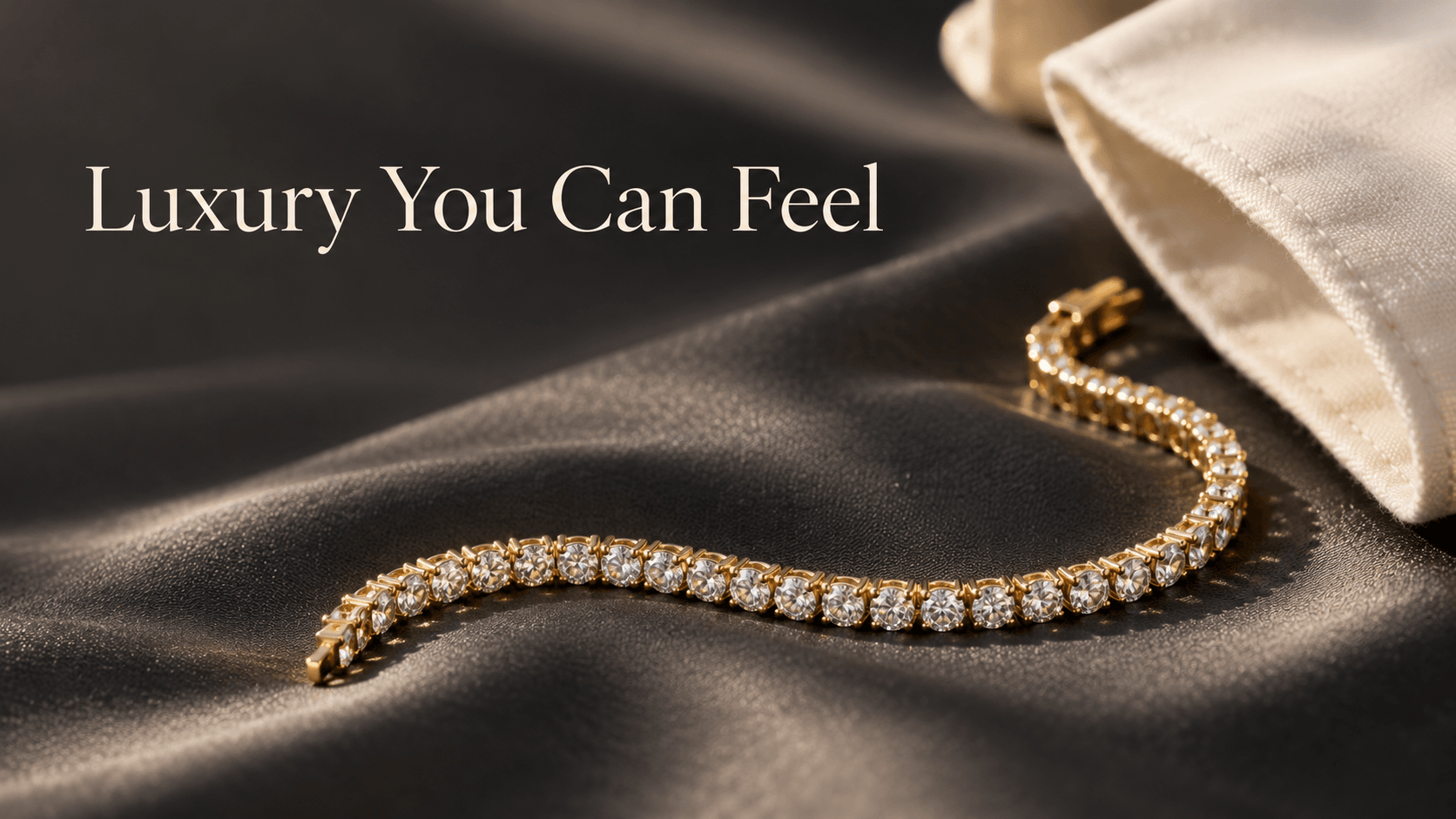
All Diamond's classic yellow-gold natural diamond tennis bracelet offers a restrained point of comparison. Its listing gives a 1.9mm width and a 7¼-inch length, alongside 1.50ct total diamond weight. Those measurements are worth considering together, not as competing claims to quality.

A Continuous Diamond Line
Classic Diamond Tennis Bracelet 1.50ct G/SI in 18k Yellow Gold
The listing pairs 1.50ct total diamond weight with a 1.9mm width and a 7¼-inch length. Use those details to picture the proportions, then ask about movement, fit and the fastening on the actual piece.
Compare The Shape Of The Light
Explore the difference between a continuous diamond line and a design with more visible chain.
The broader idea of couture details becoming wearable applies here in miniature. A beautiful line still has to become a comfortable object. Movement is part of that translation, not an afterthought.
 Try the bracelet beside a familiar cuff and through ordinary movements, not only in a display pose.
Try The Fit In Your Own Routine
There is no useful reason to force every bracelet into one universal fit rule. The design, your wrist and your preference all play a part. A piece that feels pleasantly fluid to one wearer may move more than another wants.
Check the fastening first, then try the bracelet in the positions that matter to you. Rest your forearm on a desk. Raise your hand as though reaching for a door handle. Put on the sort of sleeve you actually wear. Notice whether the piece pinches, slides farther than you like or presses against the wrist when your hand bends.
A wrist measurement alone does not replace that experience. Before ordering, ask about the finished length, the available size options and whether any length adjustment is possible for that specific design. Where a return or adjustment would matter to your decision, confirm the applicable terms before buying.
A finer chain bracelet may suit someone who likes diamonds but does not want an unbroken diamond line. The double-chain design below provides that alternative. Its two chains and small bezel-set diamond details give you a different composition to assess, rather than a lesser version of a tennis bracelet.

A Lighter Rhythm
Diamond Double Chain Bracelet 0.15ct G/SI 18k Yellow Gold
Ten round diamonds totalling 0.15ct sit within a double-chain composition in 18k yellow gold. This is an alternative for readers drawn to visible gold and space between diamond details.
Look At The Setting From The Side
The view from above explains only part of a bracelet. Ask for side and underside views too. These can help you understand how the diamonds are held, how much metal you will feel and how the design is likely to sit against your wrist.
Claw settings hold a stone at individual points; a rub-over or bezel design brings metal around its edge. The choice changes the visible balance between diamond and metal. Start by looking at that difference rather than assuming one setting must be right for everyone.
A rub-over edge may appeal when you prefer a clearly outlined, contained appearance. An open claw-set line may be closer to the effect you have in mind. Either way, the practical questions belong to the actual bracelet: are its edges comfortable, how does it meet a cuff, and what does the jeweller recommend for its care?
Do not read “low maintenance” as “needs no attention”, or “secure” as a promise that damage is impossible. Choose the setting you like, then understand how to look after the whole piece.
See The Setting
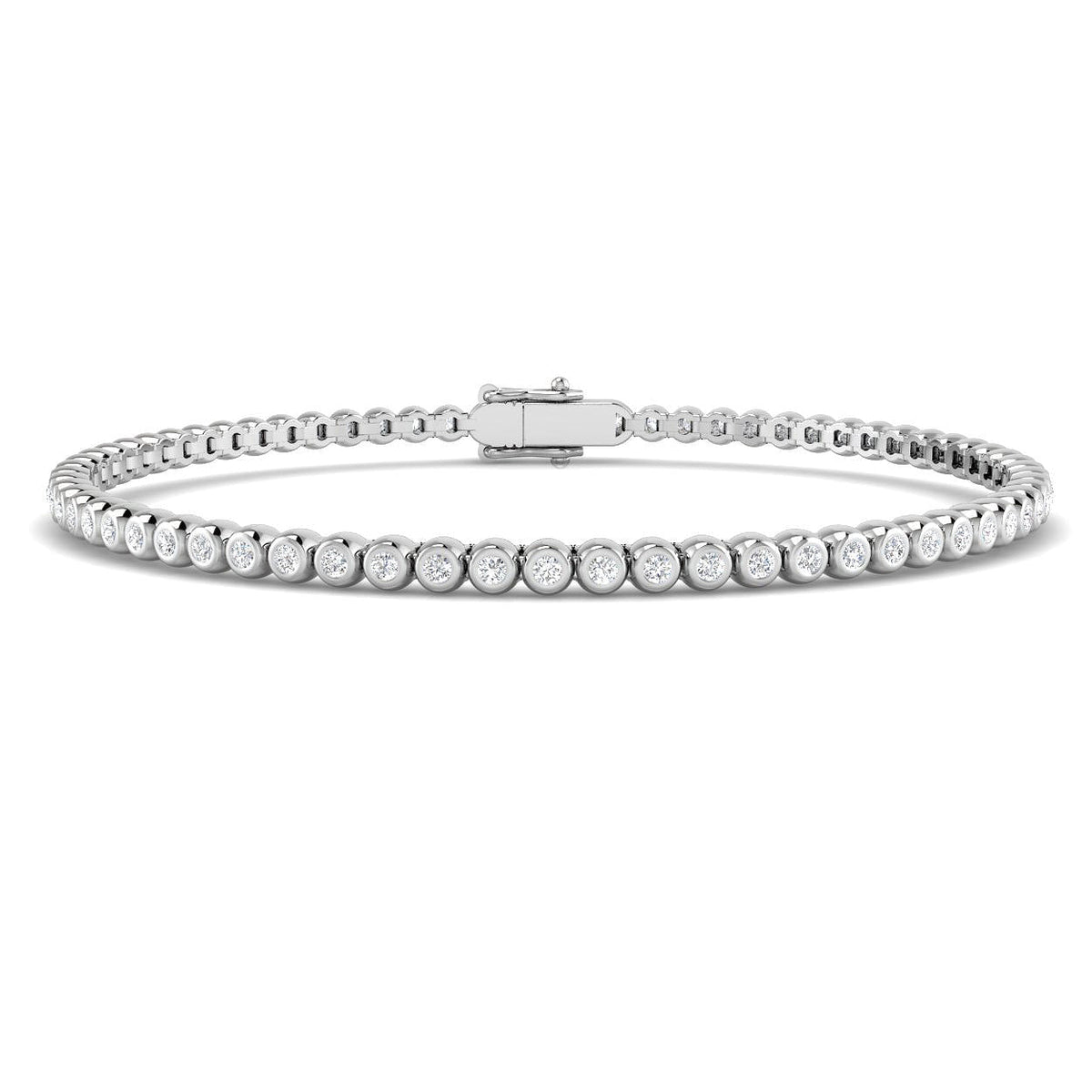
Rub Over Diamond Tennis Bracelet 1.00ct G/SI in 9k White Gold
The rub-over design brings a visible white-gold outline around its round diamonds. Its listed 3.0mm width and 1.00ct total diamond weight make a useful contrast with the narrower claw-set example.
Make The Clasp Part Of The Appointment
The clasp is easy to overlook when the diamonds have your attention. Give it its own few minutes.
Ask the jeweller to demonstrate the fastening and any additional safety mechanism fitted to that particular bracelet. Then try it yourself without forcing it. You should understand how it closes, how to recognise that it is properly engaged and how to release it again.
This is especially worth doing when a small fastening is difficult for your fingers. A design you can manage comfortably may bring more pleasure than one you need help to put on every time. There is nothing unrefined about making that a buying priority.
Ask what to do if the closure later feels different, becomes difficult to operate or no longer engages as demonstrated. The sensible response is to stop wearing it and arrange an inspection, rather than relying on an unfamiliar click or trying to tighten a delicate part yourself.
Let Your Wardrobe Have A Say
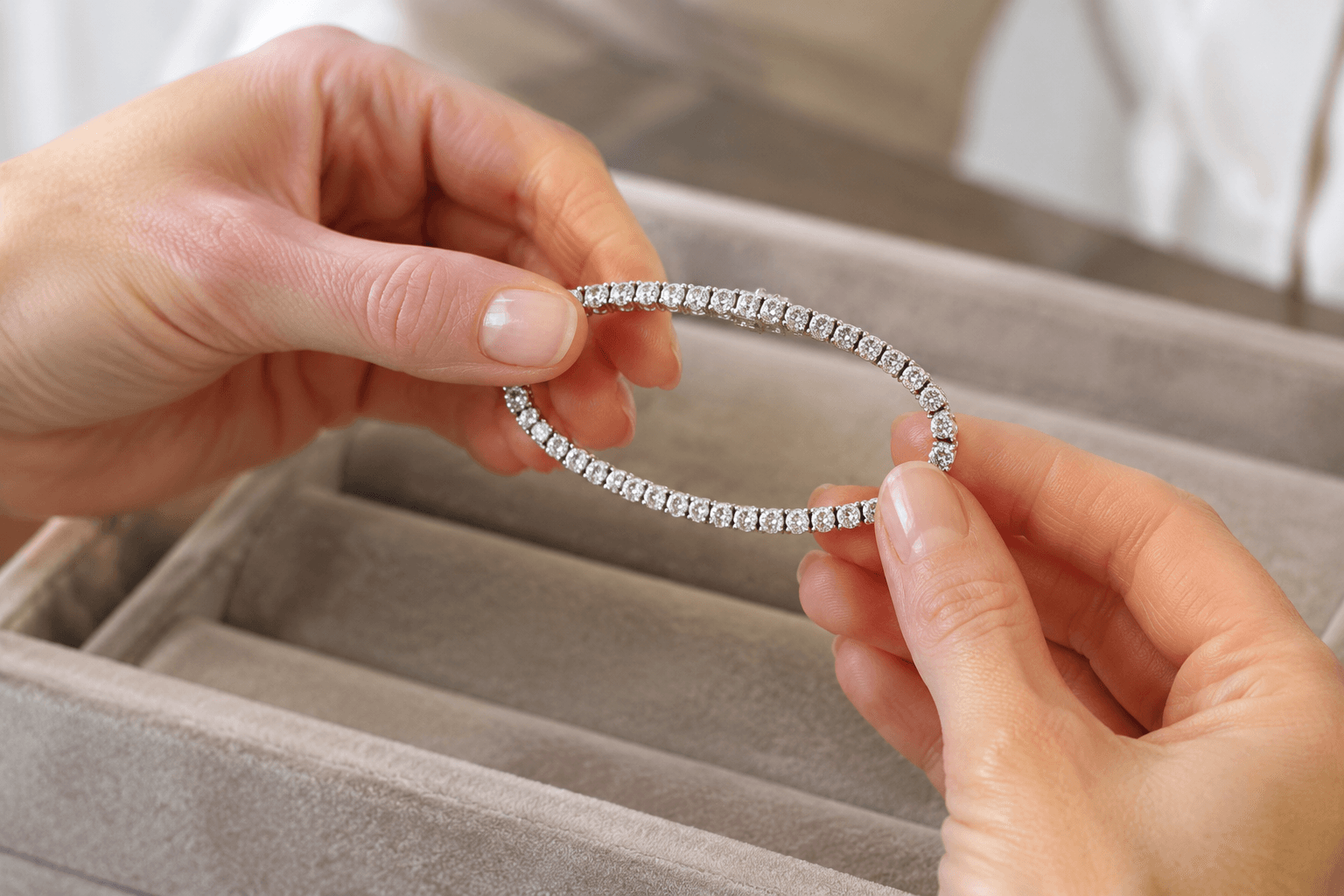
Try the bracelet with a familiar cuff before planning its first grand occasion. Does the line look right beside the fabric? Does it sit where you enjoy seeing it? Is the contrast between metal and clothing pleasing, or are you adjusting the sleeve simply to accommodate the jewellery?
When combining pieces, begin with one bracelet and add the second deliberately. A stack is a composition, not a requirement. Check that neighbouring pieces do not rub or strike in a way that concerns you, and ask your jeweller before making a watch and diamond bracelet permanent companions on the same wrist.
You can also choose restraint without choosing invisibility. As our guide to minimalist diamond jewellery explores, a simple outline gives its smaller details room to matter. One well-chosen bracelet may be all the emphasis an outfit needs.
Keep The Pleasure, Not The Worry
Before making the final decision, ask for the care advice that applies to the bracelet, including its setting and any other gemstones. Discuss inspections and what changes should prompt you to contact the jeweller. A clear answer is more useful than a generic assurance that diamonds are hard.
Then give the piece a realistic place in your routine. Take it off for activities that expose it to knocks, pulling or chemicals, and store it so it is not rubbing against other jewellery. Do not improvise cleaning methods when you are uncertain about the piece's construction or treatment history.
Most importantly, leave room for personal preference. You may favour a slender line you wear often over something more substantial that feels less like you. That is a considered luxury decision, not a compromise to apologise for.
The best test is simple: does the bracelet look right, feel right and make sense for the way you intend to wear it? When all three agree, the diamonds are only the beginning of its appeal.
Find A Bracelet You Will Enjoy Wearing
Begin with the line that catches your eye, then give fit, movement and the fastening equal attention. A beautiful bracelet should make sense beyond its first photograph.
Frequently Asked Questions
Does A Higher Carat Weight Mean A Better Bracelet?
Not by itself. Total diamond weight describes the combined weight of the diamonds, not how the bracelet fits, how its links move or whether you like the overall design. Read the width, length, setting and diamond specifications together.
How Should A Diamond Bracelet Fit?
It should feel comfortable through ordinary wrist movement and should not slide farther than you prefer. Try the actual design where possible. Ask about finished length and size options rather than applying one measurement rule to every bracelet.
Is A Rub-Over Setting Better Than A Claw Setting?
They offer different balances of metal and diamond. A rub-over setting brings metal around the stone’s edge, while claws hold it at individual points. Compare the actual bracelet’s comfort, finish and appearance, and ask for care guidance specific to the design.
What Should I Check About The Clasp?
Ask for a demonstration of the closure and any safety mechanism, then practise operating it without force. You should know how to recognise proper engagement and what to do if its behaviour changes.
Can I Wear A Diamond Bracelet Every Day?
Choose a design suited to your routine and follow the jeweller’s care advice. Everyday wear should still include removing it for activities involving knocks, pulling or chemicals. Arrange an inspection when a setting, link or fastening seems different.