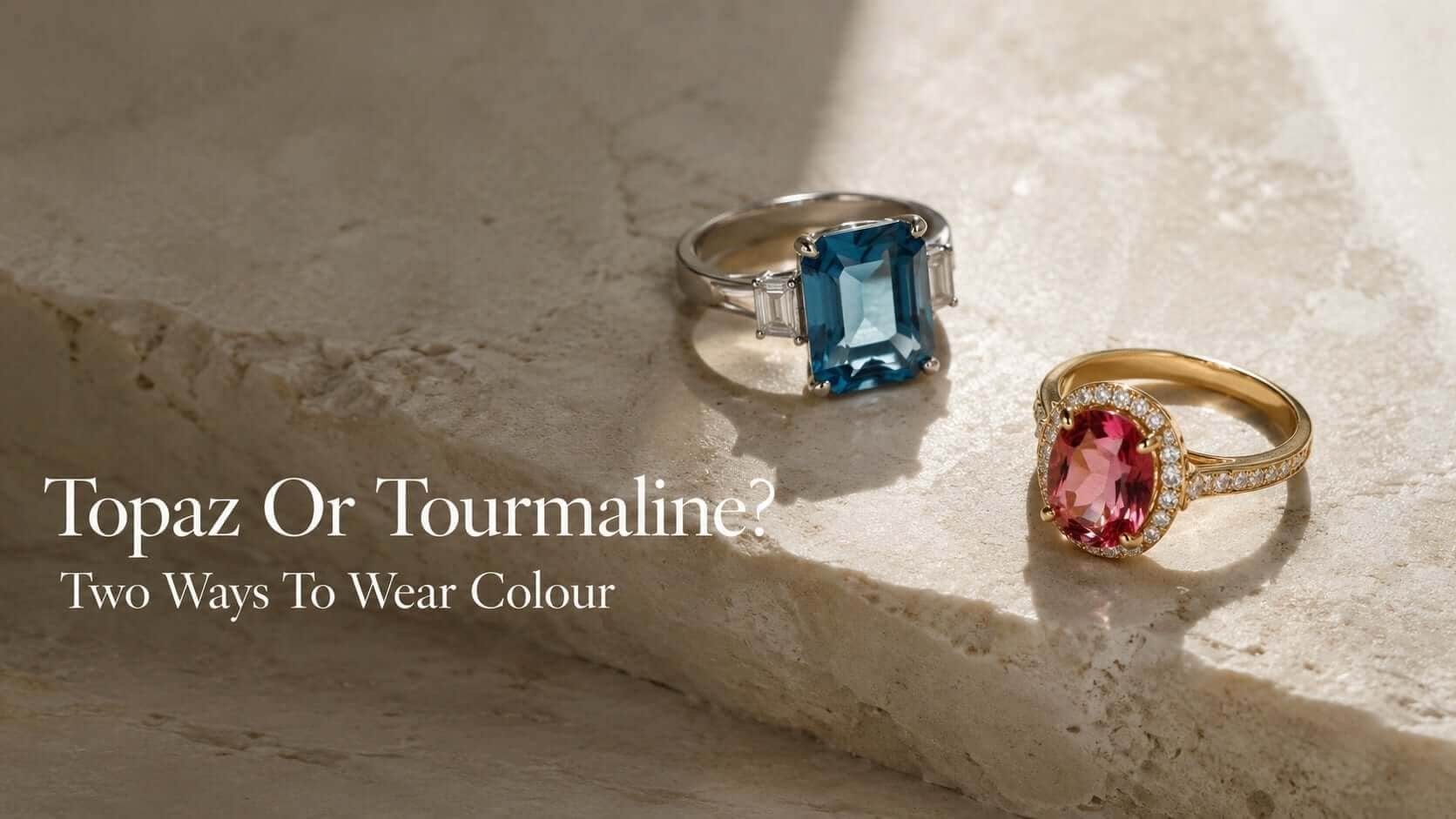

Some gemstones announce themselves through rarity. Topaz and tourmaline do something more intimate: they make colour feel personal.
At first glance, the comparison seems simple. Topaz is imagined as clear and blue. Tourmaline is remembered in pink or green. Yet both extend far beyond those familiar shades, and the choice between them is not merely a question of hue. One tends to give jewellery a polished, crystalline clarity. The other offers a more varied and individual colour language, sometimes complete with visible inclusions or bands of colour that become part of its identity.
This is not really a contest to decide which gemstone is better. It is a way to understand which kind of beauty you want to live with.
In Brief
Choose topaz when you are drawn to clear brilliance, clean colour, eye-clean appearance and elegant visual scale. Choose tourmaline when you want a more individual palette, from pink and red to green, blue and bi-colour stones, with character that can vary noticeably from one gem to another. For rings, do not rely on hardness alone. Topaz is harder but has perfect cleavage, while tourmaline is slightly softer but has fair toughness. Setting, condition and how the jewellery will be worn matter as much as the number on the Mohs scale.
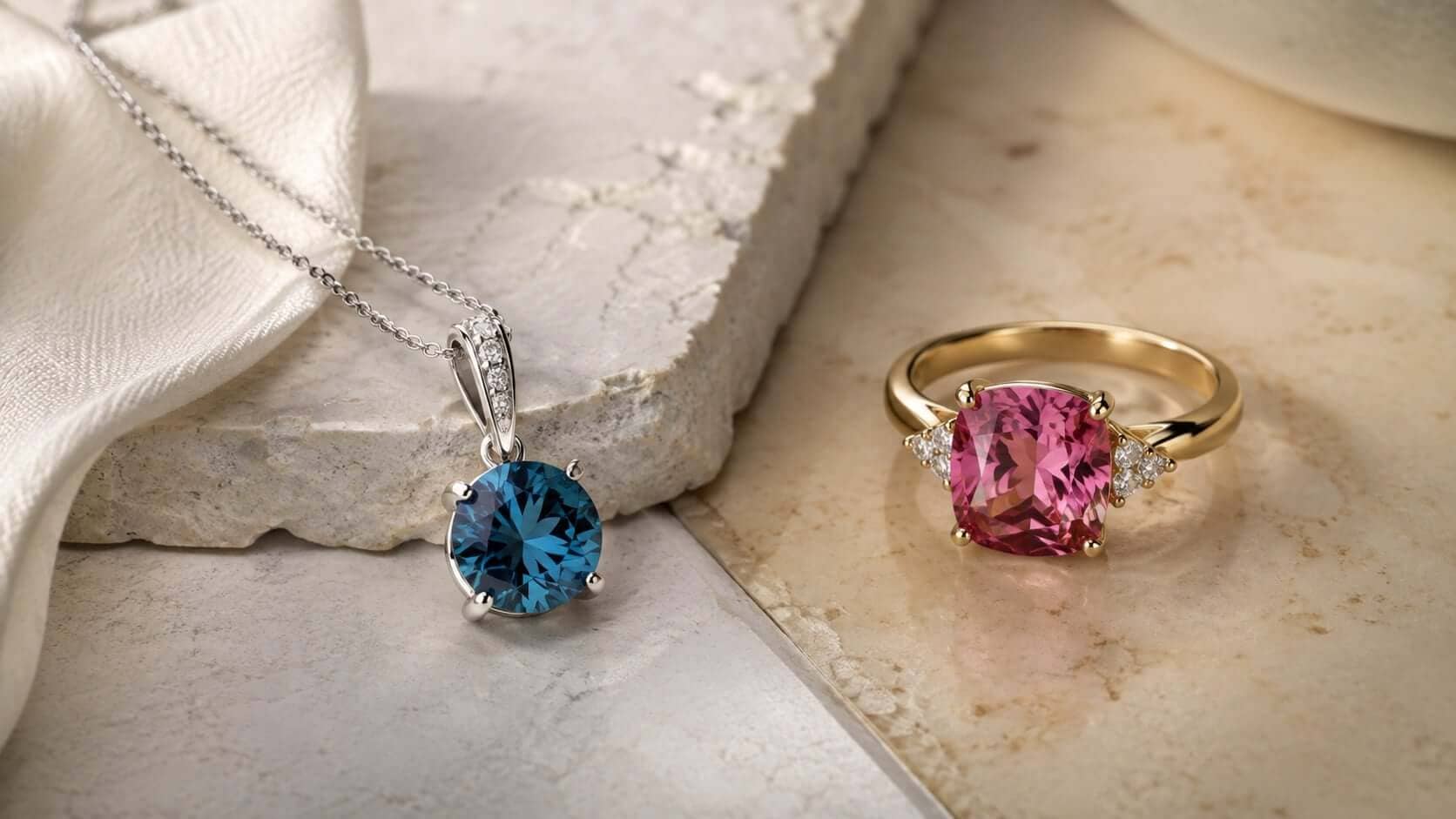
Table Of Contents
- They Share A Colourful Reputation, Not A Personality
- Topaz: Polished Light And Clear Colour
- Tourmaline: Colour With Character
- Colour Is The Real Decision
- Clarity Changes The Character
- Hardness Is Not The Same As Toughness
- Treatments Are Part Of The Conversation
- Cut And Scale Change What You See
- Metal And Diamonds Set The Mood
- Topaz Or Tourmaline: Which Should You Choose?
- How To Care For Topaz And Tourmaline
- Find The Colour That Feels Like Yours
- Topaz And Tourmaline FAQs
They Share A Colourful Reputation, Not A Personality
Topaz is a distinct mineral species. Tourmaline is a family of related mineral species whose chemistry helps create an exceptionally broad range of colours. The distinction is visible in jewellery.
Topaz often appears visually composed. A well-cut stone can have a glass-clear quality, high polish and a clean response to light. Even strong blue topaz usually feels orderly inside a precisely faceted structure.
Tourmaline is less inclined to behave as one thing. It may be pale or saturated, almost perfectly clear or visibly included, evenly coloured or deliberately zoned. Some crystals move from green to pink. Others carry blue-green or red-purple tones that seem to change as the jewellery moves. That variability is not a flaw in the category. It is the category's great seduction.
The older habit of placing both stones under the vague label of semi-precious gemstones tells you very little about their actual quality or desirability. Colour, cut, clarity, treatment, durability and design matter far more than the old hierarchy.
Topaz: Polished Light And Clear Colour
Topaz has one of the wider natural colour ranges in the gemstone world. It can be colourless, yellow, orange, brown, pink, red, purple, blue or light green. In modern jewellery, however, many buyers encounter it first in colourless, sky-blue or deeper London-blue forms.
Part of the appeal is clarity. The Gemological Institute of America notes that topaz used in jewellery is typically eye-clean, and the mineral can form in crystals large enough to produce sizeable cut gems. This gives topaz a particular visual confidence. It can offer clear colour and presence without the stone looking busy inside.
Blue topaz has a cool, lucid beauty. Sky blue feels airy and informal, rather like light passing through clear water. London blue is deeper and more deliberate, with a teal or inky undertone that can look especially refined against white gold. Colourless topaz is quieter. It relies on brightness, polish and the precision of the cut rather than a strong hue.
Warmer and rarer topaz colours exist too. Fine orangy-red to red stones sit at the more valued end of the spectrum, while imperial topaz belongs to a more collector-led conversation. The word topaz alone is never enough to establish value. The exact variety matters.

A Cooler Topaz Mood
London Blue Topaz Solitaire Necklace Pendant 0.60ct in 9k White Gold 5.0mm
A small, saturated blue topaz shows how the stone can deliver clear colour without needing an elaborate setting.
Tourmaline: Colour With Character
If topaz can feel like a pane of coloured light, tourmaline is closer to a painter's palette.
Tourmaline appears across virtually every hue. Pink and red stones can feel romantic but rarely timid. Greens move from soft botanical shades to deep forest tones. Blue can lean towards green or violet. Copper-bearing Paraiba-type stones occupy an electric blue-green world, while parti-coloured and watermelon tourmalines make colour zoning a feature rather than something to conceal.
Trade names describe some of these personalities. Rubellite covers strongly coloured pink to red material, indicolite blue to greenish-blue stones, and watermelon tourmaline a familiar pink-and-green combination. Colour quality still matters more than the romance of the label.
Tourmaline also rewards close looking. The GIA's tourmaline quality guidance explains that colour intensity, tone, clarity and orientation all influence appearance. Many tourmalines are strongly pleochroic, which means the cutter must consider how different crystal directions alter the visible colour. A good cut does not merely release sparkle. It manages the personality of the hue.

Tourmaline With Structure
Art Deco Cushion Pink Tourmaline and Diamond 1.05ct Ring 18k Yellow Gold
Pink tourmaline becomes more architectural when baguette and round natural diamonds sharpen its outline in an Art Deco composition.
See How Colour Changes A Finished Design
A gemstone reveals more in a setting than it does as a name on a list. Explore pink tourmaline with natural diamonds, or compare it with the wider range of diamond and gemstone rings.
Colour Is The Real Decision
When buyers ask whether topaz or tourmaline is the better gemstone, they are often asking a colour question without quite realising it.
Topaz is persuasive when you want colour to feel clean. Its familiar blues are easy to place beside white, grey, navy, denim and cool tailoring. London blue has enough depth for evening, while sky blue can sit comfortably in everyday jewellery. Colourless topaz behaves almost like a point of light, particularly in simple earrings or a pendant.
Tourmaline is persuasive when you want colour to feel expressive. Pink tourmaline can be soft, vivid, raspberry-toned or slightly purple. Green tourmaline ranges from cool mint to deep, mossy or blue-green shades. A bi-colour stone can hold two moods at once, which makes it especially appealing in jewellery chosen for individuality rather than perfect coordination.
If blue or green is your starting point, our guide to choosing blue or green gemstones with diamonds explores how those colours alter the mood of a finished piece. The useful question here is slightly different: do you want a colour that feels controlled, or one that feels discovered?
Clarity Changes The Character
Topaz and tourmaline ask buyers to read clarity differently.
Faceted topaz is commonly expected to look clean to the unaided eye. Because transparent material is widely available, obvious inclusions are more likely to feel distracting, particularly in pale or colourless stones. A clean interior allows the high polish and orderly faceting to dominate.
Tourmaline can be more forgiving, especially in pink and red material. It often forms in liquid-rich environments, so thread-like cavities and growth tubes are not unusual. Strong colour can make modest inclusions acceptable.
That does not mean every inclusion should be celebrated. Fractures reaching the surface, conspicuous white inclusions or damage that weakens the stone deserve caution. It means only that an attractive tourmaline should be judged as a whole. A vivid pink stone with a little visible character may be more compelling than a cleaner but lifeless one.

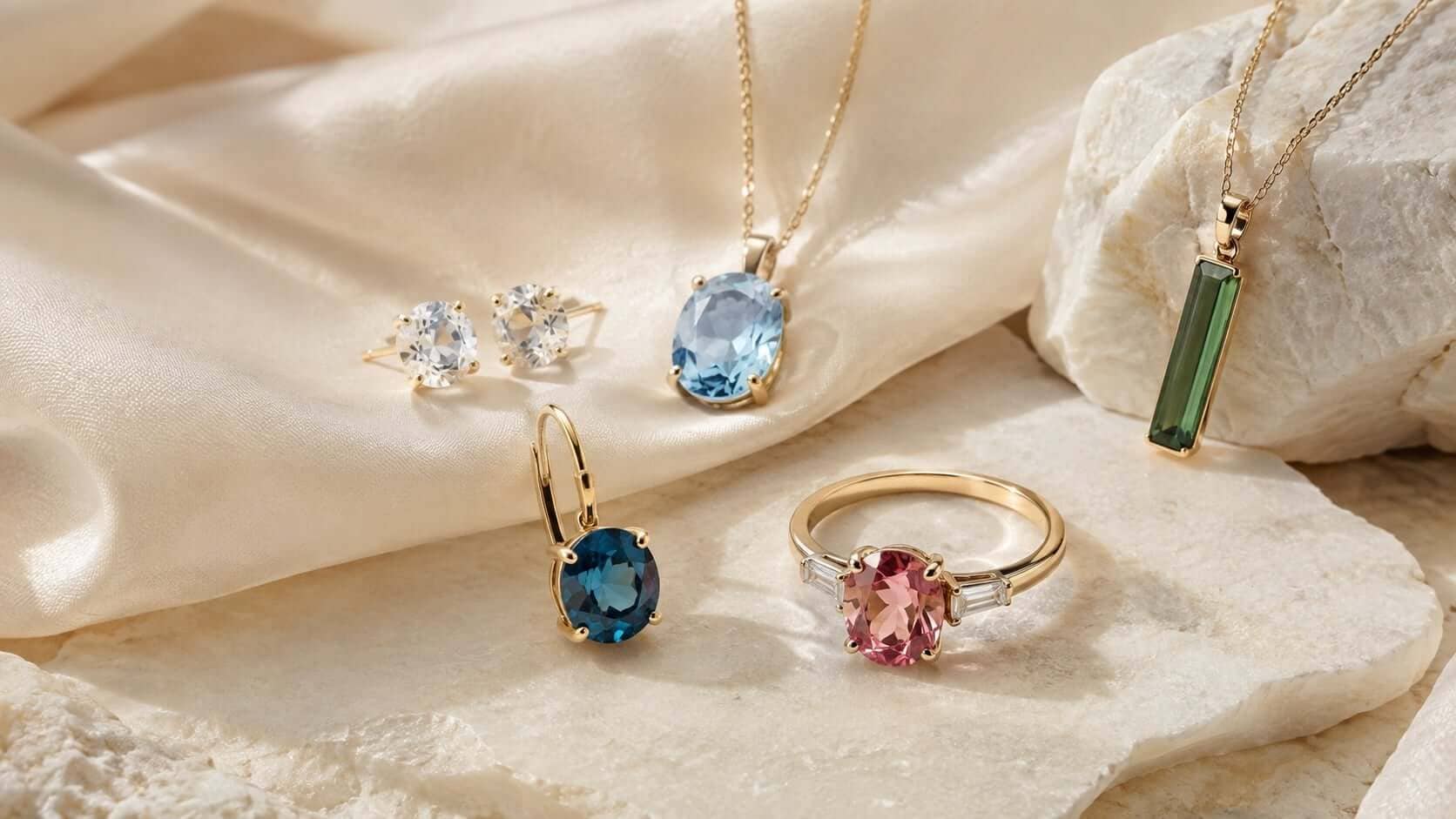
Topaz Without Blue
White Topaz Solitaire Earrings 1.00ct in 9k White Gold 5.0mm
Colourless topaz puts the emphasis on polish and brightness, revealing a quieter side of a gemstone often associated only with blue.
Hardness Is Not The Same As Toughness
This is the point most likely to be oversimplified.
Topaz ranks 8 on the Mohs hardness scale. Tourmaline generally ranks 7 to 7.5. Taken alone, those figures make topaz sound like the obvious winner for wear. Yet hardness measures resistance to scratching, not resistance to breaking.
Topaz has perfect basal cleavage. A sharp blow in the wrong direction can split the stone, which is why the GIA rates its toughness as poor and advises protective settings or jewellery less exposed to impact. Tourmaline is slightly easier to scratch, but its toughness is considered fair. It can still fracture under heat or a severe knock, but it does not carry the same cleavage issue.
In practice, both gems can be worn and enjoyed, but the jewellery type matters.
For pendants and earrings: both stones are appealing choices because they are less exposed to hard knocks.
For occasional rings: either can work well in a thoughtfully made setting, particularly when the edges are protected.
For a ring worn every day: consider the setting height, exposed corners, the wearer's habits and willingness to remove the ring for practical tasks.
For an engagement ring: do not choose by hardness alone. Our guide to choosing a gemstone centre stone explains why durability, setting and lifestyle need to be considered together.
Treatments Are Part Of The Conversation
Gemstone treatment is not automatically a reason to reject a piece. It is a reason to expect clear description.
Much of the blue topaz seen in jewellery begins as colourless material and receives irradiation, often followed by heat, to create or stabilise the blue. The result can be attractive, durable in ordinary wear and more accessible than rare naturally blue material. The treatment should still be represented honestly.
Some colourless topaz is surface-coated to produce rainbow-like effects sold as mystic topaz. The coating is less durable than the stone and can be damaged by abrasion or polishing, so it needs different care from irradiated blue topaz.
Tourmaline may also be heated or irradiated. Heat treatment can be stable, while some irradiation-related colour may fade with heat or strong light. Significance depends on the stone, its value and the disclosure supplied.
For ordinary jewellery, a clear written description may be proportionate. For an unusually valuable tourmaline, a rare topaz colour or a stone sold with a premium based on origin or treatment status, an independent report from a recognised gemmological laboratory can become much more useful.
Cut And Scale Change What You See
Topaz often forms in large crystals and is frequently cut into ovals or pears that preserve weight while showing its clarity. It can therefore offer an impressive face-up presence, particularly in pendants, earrings and cocktail jewellery. Large size alone does not make a topaz rare, but generous scale can be part of its pleasure.
Tourmaline crystals are often long, so elongated rectangles, emerald cuts and slender custom shapes appear naturally in the market. The cutter also has to manage pleochroism and tone. A dark crystal can become almost closed or inky if oriented badly, while intelligent cutting can bring a heavy colour to life.
Carat weight is therefore never a complete description. Look from the front. Does the whole surface have life? Is the colour attractive, or does darkness swallow part of the stone? Does the outline suit the setting? Is depth adding colour or merely hiding weight below the mount?
Topaz may give you more visible scale for the budget in common colours. Fine tourmaline, particularly in sought-after colours and larger clean stones, can rise much more sharply in value. Neither category has one universal price level.
Metal And Diamonds Set The Mood
White gold gives blue topaz its cleanest expression. It keeps sky blue fresh and allows London blue to feel cool and architectural. Yellow gold creates a stronger contrast, warming the composition and making deep blue appear richer.
Pink tourmaline behaves beautifully in both directions. Yellow gold makes it feel warm, romantic and slightly vintage. White gold gives the pink a clearer edge and can pull the design towards Art Deco geometry. Green tourmaline often becomes more botanical in yellow gold and sharper in white metal.
Natural diamonds add another layer. Around tourmaline, they define and intensify colour. Beside topaz, they distinguish transparent colour from white light. The best setting does not drown the gemstone in sparkle. It gives the colour a frame.
This is also where a new piece should be considered against what you already own. A topaz pendant may become the cool point of colour in a mostly white-metal collection. A pink tourmaline ring may be the deliberate disruption in a quieter jewellery wardrobe. Our guide to building a fine jewellery collection that feels like you offers a useful way to judge whether a new colour belongs.
Topaz Or Tourmaline: Which Should You Choose?
Choose Topaz If...
- You prefer crisp, transparent colour and high polish.
- Sky blue, London blue or colourless stones suit your wardrobe.
- You like clean-looking gems that are commonly eye-clean.
- You want visible scale without assuming that size alone equals rarity.
- You are choosing earrings or a pendant, or a ring with a suitably protective setting.
Choose Tourmaline If...
- You want a wider and more individual colour story.
- Pink, red, green, blue or bi-colour stones appeal to you.
- You enjoy subtle variations and do not require every gem to look clinically identical.
- Colour matters more to you than absolute clarity.
- You want a gemstone that can feel romantic, artistic or collector-led depending on the variety.
Choose either if the stone is attractive face-up, the treatment is represented clearly, the setting suits the way it will be worn and the colour continues to hold your attention after the first flash of novelty.
The most useful final test is not technical. Imagine the piece with your ordinary clothes, not just under jewellery lighting. Does the topaz bring the clean point of colour your wardrobe lacks? Does the tourmaline feel like a shade you have been choosing in other parts of your life for years? Personal colour is often recognised before it is explained.
How To Care For Topaz And Tourmaline
Both gemstones respond best to gentle care. Warm water, mild soap and a soft brush or cloth are safer than aggressive cleaning. The GIA advises against steam and ultrasonic cleaning for both topaz and tourmaline.
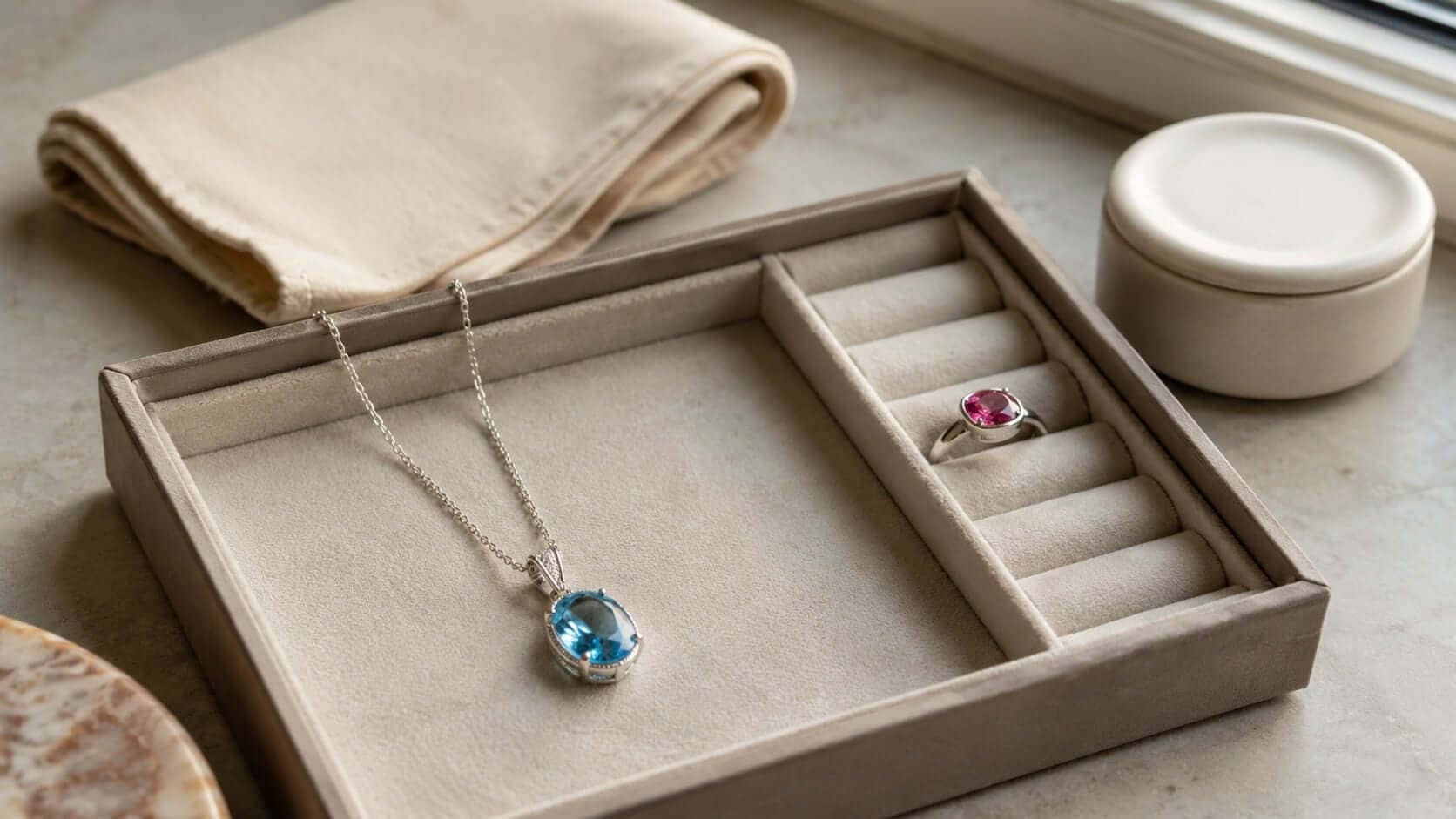
Avoid sudden temperature changes and high heat. Remove rings before heavy housework, gardening, exercise involving weights or any activity likely to deliver a hard knock. Store pieces separately so gemstones and metal surfaces do not scratch one another. If a ring has been struck or a setting begins to feel different, stop wearing it until a jeweller has checked the stone and claws or bezel.
Care should reflect the actual piece. A simple topaz pendant asks less of its owner than a large topaz cocktail ring. A compact tourmaline in a protective setting is a different proposition from an elongated stone with exposed corners. Good jewellery advice begins with the design in front of you, not the gemstone name in isolation.
Find The Colour That Feels Like Yours
Topaz offers light with a polished edge. Tourmaline offers colour that can feel found rather than standardised. One may slip into an existing collection with immediate ease. The other may become the piece that changes the atmosphere of everything beside it.
Do not choose the more prestigious name or larger carat weight by default. Choose the colour you will continue to notice, in a setting that respects the stone and the life it will enter.
Explore Topaz, Tourmaline And Gemstone Colour
Compare cool topaz pendants and earrings with pink tourmaline rings set alongside natural diamonds. The right piece should not merely add colour. It should make the rest of your jewellery feel more like you.
Topaz And Tourmaline FAQs
Is topaz more durable than tourmaline?
Topaz is harder, ranking 8 on the Mohs scale compared with 7 to 7.5 for tourmaline. However, topaz has perfect cleavage and poor toughness, so a sharp blow can split it. Tourmaline is slightly softer but has fair toughness. The setting and type of wear matter.
Which is more valuable, topaz or tourmaline?
Neither gemstone has one fixed value level. Common blue or colourless topaz can be accessible, while fine imperial topaz can be rare and valuable. Tourmaline ranges from affordable material to exceptional rubellite, chrome or copper-bearing stones. Colour, treatment, clarity, cut, size and rarity determine the answer.
Is blue topaz naturally blue?
Naturally blue topaz exists, but much of the blue topaz used in jewellery is colourless topaz treated by irradiation, often with heat, to produce the blue. This is an accepted treatment when it is described honestly.
Can tourmaline be worn every day?
Tourmaline can be worn regularly, especially in earrings and pendants. A tourmaline ring needs more thought because hands receive more knocks. Choose a sound stone, an appropriate setting and remove it for practical tasks that could damage it.
Is topaz or tourmaline better for an engagement ring?
Either can suit a carefully worn engagement ring, but neither is as carefree as sapphire or ruby. Topaz needs protection from blows because of its cleavage. Tourmaline is slightly softer and can abrade over time. A low, protective setting and realistic wear habits are important.
Are topaz and tourmaline birthstones?
Yes. Precious topaz is associated with November, while blue topaz is also used as a December birthstone. Tourmaline is one of October's birthstones. Birthstone tradition can add meaning, but colour and wearability remain more useful buying guides.